AI News Roundup: Boston Dynamics and Google DeepMind Reunite to Build Smarter Humanoid Robots
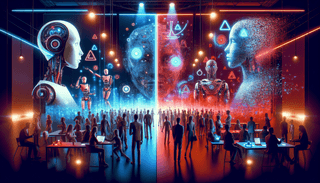
CES 2026 is in full swing, and the AI announcements are coming fast. But one story stands above the rest: nearly a decade after Google sold Boston Dynamics to SoftBank, the two companies are reuniting. Google DeepMind will help make the Atlas humanoid robot smarter using its Gemini Robotics foundation models - a partnership that could accelerate the humanoid robot race significantly.
Here’s everything you need to know from the biggest week in consumer technology.
The Big Story: Boston Dynamics and DeepMind Reunite
In what might be the most significant AI robotics partnership in years, Boston Dynamics and Google DeepMind announced a major collaboration at CES 2026. DeepMind will integrate its Gemini Robotics foundation models into Atlas, Boston Dynamics’ production-ready humanoid robot.
The backstory makes this particularly interesting. Google acquired Boston Dynamics in 2013, only to sell it to SoftBank in 2017. Hyundai Motor Group later acquired controlling interest in 2020. Now, nearly a decade after parting ways, Google’s AI division and the world’s most famous robotics company are working together again.
The timing is strategic. Hyundai unveiled its AI Robotics Strategy at CES, announcing that all Atlas units for 2026 are already committed - shipping to the Robot Metaplant Application Center and Google DeepMind. Hyundai aims to manufacture up to 30,000 humanoids annually by 2028, with Atlas robots beginning factory tasks at Hyundai Motor Group Manufacturing America by 2028.
The production-ready Atlas features 56 degrees of freedom and can lift 110 pounds. With DeepMind’s foundation models providing the intelligence layer, this partnership positions Hyundai/Boston Dynamics as perhaps the most vertically integrated player in humanoid robotics.
Sources: TechCrunch, Boston Dynamics Blog, Hyundai Newsroom
Today’s Top Stories
Nvidia’s CES 2026 Blitz: Rubin, Alpamayo, and “The ChatGPT Moment for Physical AI”
Jensen Huang delivered a keynote packed with announcements that reinforced Nvidia’s ambition to own the entire AI stack - from chips to foundation models to robotics.
Rubin Platform: Nvidia unveiled the Vera Rubin superchip, combining one Vera CPU and two Rubin GPUs. The platform promises a 10x reduction in inference token cost and 4x fewer GPUs needed to train mixture-of-experts models compared to Blackwell. It’s designed specifically for agentic AI and reasoning models.
Alpamayo for Autonomous Vehicles: Nvidia announced Alpamayo, a 10-billion-parameter chain-of-thought vision language action model for autonomous vehicles. The open-source release includes 1,700+ hours of real driving data. Huang declared: “The ChatGPT moment for physical AI is here.” The 2025 Mercedes-Benz CLA will be the first production vehicle with Nvidia’s complete AV stack.
Physical AI Models: Nvidia released a suite of open-source robotics models including Cosmos Predict 2.5 (world models for synthetic data), Cosmos Reason 2 (reasoning for intelligent machines), and Isaac GR00T N1.6 (purpose-built for humanoid robots). A partnership with Hugging Face will integrate these into the LeRobot framework.
Nvidia also announced the Jetson T4000 module (1,200 FP4 TFLOPS, 64GB) priced at $1,999 - positioning itself as “the Android of generalist robotics.”
Sources: NVIDIA Newsroom, TechCrunch, Yahoo Finance
Anthropic Prepares for Potential $300B+ IPO
Anthropic is laying the groundwork for a potential 2026 IPO that could value the company above $300 billion. The Claude developer was recently valued at $183 billion and has hired law firm Wilson Sonsini while holding preliminary talks with investment banks.
Adding fuel to the fire: Microsoft and Nvidia announced plans to invest up to $15 billion in Anthropic. If completed, this would represent one of the largest single investments in an AI company.
For context, OpenAI completed a secondary share sale in October 2025 valuing it at $500 billion and is reportedly targeting a $1 trillion float. The AI IPO race is heating up, with SpaceX also preparing to go public.
Meta AI Turmoil: Yann LeCun Calls New AI Chief “Inexperienced”
Meta’s AI division appears to be in turmoil. Yann LeCun, Meta’s former chief AI scientist and one of the “godfathers of AI,” publicly criticized 29-year-old AI chief Alexander Wang as “inexperienced” and warned of a staff exodus.
According to LeCun, CEO Mark Zuckerberg “basically sidelined the entire Gen AI organization” following accusations of gaming benchmarks for the Llama 4 model. Many key employees have left or plan to leave.
This is a significant development for one of the major players in open-source AI. Meta’s Llama models have been crucial to the open-source AI ecosystem, and internal instability could affect their competitive position.
Source: CNBC
Intel Launches Core Ultra Series 3 on Intel 18A
Intel entered CES 2026 with its own major announcement: the Intel Core Ultra Series 3 processors, the first compute platform built on Intel 18A - described as “the most advanced semiconductor process ever developed and manufactured in the United States.”
Pre-orders began January 6, with systems available globally starting January 27, 2026. This represents Intel’s biggest manufacturing process bet in years and could reshape the competitive landscape against AMD and Nvidia in the AI-capable processor market.
Source: Intel Newsroom
Quick Hits
-
Healthcare AI: OpenAI reports over 40 million people use ChatGPT daily for healthcare guidance, with 5%+ of all global ChatGPT messages being health-related. Users ask 1.6-1.9 million health insurance questions weekly. - Axios
-
Microsoft Acquisition: Microsoft acquired Osmos, an agentic AI data engineering platform, to accelerate autonomous data engineering in Fabric. - Microsoft Blog
-
Nadella on AI “Slop”: Microsoft CEO Satya Nadella wrote that we should stop thinking of AI as “slop” and instead view it as “bicycles for the mind.” - TechCrunch
-
Amazon: Alexa+ is now available on the web at Alexa.com, bringing the AI assistant beyond Echo devices. - TechCrunch
-
Samsung: Unveiled an AI-enabled refrigerator with Google Gemini-powered food recognition at CES 2026. - Samsung Newsroom
-
Google TV: New Gemini features will allow natural language TV control and AI-powered photo/video search. - TechCrunch
-
Funding: Kraken (Octopus Energy spin-out) raised $1B at $8.65B valuation; Lyte emerged from stealth with $107M for Physical AI perception systems; Cambium raised $100M Series B for AI-powered materials discovery. - ESG Today, Business Wire
-
Regulation: California legislators reconvened to continue AI regulation work despite President Trump’s December 2025 executive order threatening to withhold federal funding from states that adopt AI rules. - Insurance Journal
-
Legal: The proposed $1.5B Anthropic copyright settlement (Bartz v. Anthropic) moved to a new judge. Opt-out deadline is January 7, 2026. - Law.com
What This Means
CES 2026’s first full day crystallized several major shifts in the AI landscape.
Physical AI has arrived. Jensen Huang’s declaration that “the ChatGPT moment for physical AI is here” isn’t just marketing. Between Nvidia’s robotics stack, the Boston Dynamics/DeepMind partnership, and Hyundai’s commitment to manufacturing 30,000 humanoids annually by 2028, we’re seeing the infrastructure for a robotics revolution falling into place. The question is no longer whether humanoid robots will enter the workforce, but when and where.
The IPO window is opening. With Anthropic, OpenAI, and SpaceX all preparing for potential 2026 public offerings, this could be the year AI’s biggest private companies face the scrutiny of public markets. These IPOs will provide unprecedented transparency into the actual economics of leading AI companies - revenue, margins, growth rates, and unit economics.
The AI platform wars are intensifying. Nvidia wants to be “the Android of generalist robotics.” Google is putting Gemini in everything from robots to refrigerators to TVs. Amazon is finally bringing Alexa+ to the web. Microsoft is acquiring agentic AI companies. Every major tech company is racing to make their AI the default platform for the next era of computing.
But challenges remain. Meta’s internal turmoil, ongoing copyright litigation, and the California-federal regulatory standoff all remind us that the path forward isn’t smooth. The companies that navigate these challenges best will likely emerge as the dominant platforms of the AI era.
The physical AI era is beginning. CES 2026 is just the opening act.
Sources
- TechCrunch - Boston Dynamics/DeepMind Partnership
- Boston Dynamics Blog - AI Partnership
- Hyundai Newsroom - AI Robotics Strategy
- NVIDIA Newsroom - Rubin Platform
- TechCrunch - Nvidia Alpamayo
- CNBC - Anthropic IPO
- CNBC - Meta AI Turmoil
- Intel Newsroom - Core Ultra Series 3
- Microsoft Blog - Osmos Acquisition
- Axios - ChatGPT Healthcare Usage
Ready to automate your busywork?
Carly schedules, researches, and briefs you—so you can focus on what matters.
Get Carly Today →Or try our Free Group Scheduling Tool or Free Booking Page