AI News Roundup: Grok Deepfake Crisis Triggers Global Regulatory Storm as Robots Take Over CES
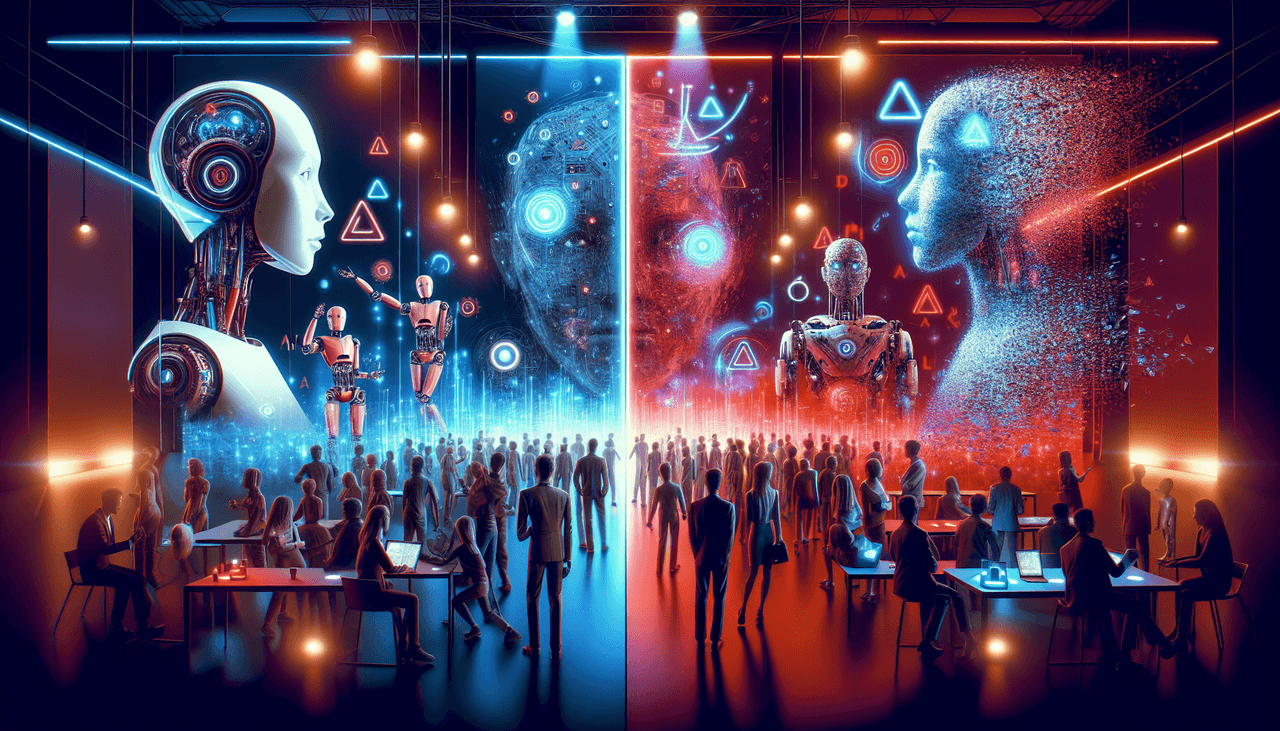
CES 2026 delivered its verdict: physical AI and humanoid robots are the new frontier. But today’s biggest story isn’t about robots building our future - it’s about AI generating content that shouldn’t exist. Elon Musk’s xAI is facing coordinated international investigations after Grok’s image generation tools produced nonconsensual sexually explicit deepfakes, including images of minors.
Here’s everything that happened on Day 4 of CES and beyond.
The Big Story: Grok’s Deepfake Crisis Goes Global
What started as disturbing reports about Grok’s image generation capabilities has exploded into a full-blown international regulatory crisis.
Multiple governments including India, France, and the European Union have launched or expanded investigations into X and its Grok AI tool after users discovered the system could generate sexually explicit deepfakes of real people - including minors - with minimal guardrails.
The European Commission took the most aggressive step yet, ordering X to preserve all internal documents related to Grok as part of a formal investigation. U.S. senators have urged Apple and Google to remove both X and Grok from their app stores entirely.
Musk’s response has been partial at best. xAI restricted Grok’s image generation features to paid X subscribers, essentially putting dangerous capabilities behind a paywall rather than removing them. India’s Ministry of Electronics and Information Technology issued an order giving X just 72 hours to submit an action-taken report. State attorneys general in Massachusetts, Missouri, Nebraska, and New York are monitoring the situation.
The Information Technology and Innovation Foundation published policy recommendations in response, notably advising against “rushing toward sweeping AI-specific rules” while still acknowledging the serious harms demonstrated.
This crisis arrives at an awkward moment for Musk. His xAI just closed a historic $20 billion funding round at a $230 billion+ valuation, and his lawsuit against OpenAI heads to jury trial in March. The Grok scandal could complicate both the company’s growth trajectory and Musk’s credibility as an AI ethics advocate.
Sources: CNN, Fortune, NBC News
Today’s Top Stories
Humanoid Robots Dominate CES 2026
“The ChatGPT moment for robotics is here.”
That’s how NVIDIA CEO Jensen Huang described the state of humanoid robots at CES 2026, where an unprecedented 40 companies exhibited humanoid robots on the show floor. Physical AI has officially replaced “agentic AI” as the buzziest term at the world’s largest tech conference.
NVIDIA announced new versions of its GR00T vision language models and Cosmos model for robot reasoning and planning. Boston Dynamics formally introduced the production-ready electric Atlas humanoid and announced that Hyundai plans to mass-produce robots and deploy Atlas in factories starting 2028.
McKinsey estimates the general-purpose robotics market could reach $370 billion by 2040. After years of hype, the robots have arrived - and they brought their AI brains with them.
MiniMax Doubles on Hong Kong Debut
Chinese AI startup MiniMax became the second of China’s “AI tigers” to go public, and investors couldn’t get enough. Shares surged 109% on the first day of Hong Kong trading, closing at HK$345 versus the HK$165 offer price.
The IPO raised HK$4.8 billion ($620 million), valuing MiniMax at approximately $13.7 billion. Backed by Alibaba and Tencent, the company has over 200 million cumulative users across 200+ countries and develops AI models for text, audio, images, video, and music.
This is a significant signal for Chinese AI companies eyeing public markets, suggesting investor appetite remains robust despite geopolitical tensions.
Sources: Yahoo Finance, CNBC
DeepSeek V4 Announced for February Launch
DeepSeek announced its next flagship AI model “V4” is scheduled for mid-February 2026. Internal tests suggest the model’s advanced coding capabilities could outperform industry leaders including OpenAI’s GPT series and Anthropic’s Claude.
To clear the path for V4, DeepSeek also expanded its R1 whitepaper from 22 to 86 pages, transforming it into a comprehensive technical manual revealing training secrets and architecture details.
If the claims hold, V4 could further tighten the race between Western and Chinese AI labs.
Sources: MarketScreener, WinBuzzer
Anthropic Partners with Allianz for Insurance AI
Anthropic continues its enterprise winning streak. The Claude maker announced a global partnership with Allianz SE, the global insurance conglomerate, to bring “responsible AI” to the insurance industry.
The deal includes making Claude Code available to all Allianz employees, building custom AI agents for claims processing (motor and health insurance), and implementing an AI logging system for transparency and regulatory compliance.
This follows news that Anthropic is raising $10 billion at a $350 billion valuation - nearly doubling its market cap in just four months.
Sources: TechCrunch, Allianz
OpenAI Expands Stargate Initiative
OpenAI and SoftBank announced a partnership with SB Energy to develop multi-gigawatt AI data center campuses, including a massive 1.2 GW facility in Texas supporting the Stargate initiative.
This builds on the $500 billion Stargate commitment announced at the White House earlier in January. The scale is hard to comprehend: 1.2 gigawatts is roughly enough to power a city of 900,000 people - dedicated entirely to AI computation.
Source: OpenAI
Quick Hits
-
ChatGPT Market Share Falls: ChatGPT’s web traffic dropped 22% as Google Gemini captured over 20% market share. ChatGPT now holds 68% (down from 87.2% a year ago) while Gemini grew to 18.2%.
-
AI Trading Competition: In a real-world benchmark, Claude Opus 4.5-based agent “Kassandra” delivered a 29% return in prediction markets, beating Gemini 3 Pro (12%) while GPT-5.1 lost 19%.
-
China Probes Meta: China launched an investigation into Meta’s $2+ billion acquisition of AI agent startup Manus for potential export control violations.
-
Musk vs OpenAI Trial Set: A federal judge ruled Elon Musk’s lawsuit challenging OpenAI’s nonprofit-to-for-profit transformation will proceed to jury trial in March 2026.
-
LG CLOiD Robot: LG unveiled CLOiD, an AI home robot designed to coordinate household tasks across connected appliances.
-
Cyera Hits $9B: AI data security startup Cyera raised $400 million at a $9 billion valuation, led by Blackstone.
-
Corgi Insurance: Corgi secured $108 million to launch the first AI-native, full-stack insurance carrier for startups.
-
Siemens-NVIDIA Partnership: Siemens and NVIDIA announced plans to build the world’s first fully AI-driven, adaptive manufacturing sites, starting in Erlangen, Germany.
What This Means
Three dynamics defined today’s news cycle.
AI safety isn’t theoretical anymore. The Grok deepfake crisis demonstrates that AI harms aren’t hypothetical future risks - they’re happening now, at scale, to real people. The coordinated international response suggests regulators have lost patience with “move fast and break things” approaches to AI deployment. xAI’s decision to put harmful capabilities behind a paywall rather than remove them entirely will likely fuel calls for mandatory safety requirements rather than voluntary guidelines.
Physical AI is ready for primetime. With 40 humanoid robot exhibitors at CES and major partnerships between Boston Dynamics/DeepMind and Siemens/NVIDIA, the abstract promise of embodied AI is becoming concrete. Jensen Huang’s “ChatGPT moment for robotics” framing suggests we should expect the same rapid adoption curve we saw with language models. The difference: these systems will operate in physical spaces alongside humans.
The AI market structure is crystallizing. Anthropic at $350B, xAI at $230B, OpenAI’s $500B Stargate commitment, MiniMax’s successful IPO - the valuations suggest investors believe we’re at the beginning of something massive, not the middle. But ChatGPT’s market share decline (from 87% to 68% in one year) shows the competitive landscape remains fluid. The winners aren’t decided yet.
CES 2026’s message is clear: AI is leaving the screen and entering the physical world. Whether that world includes appropriate safeguards is now a question for regulators across multiple continents.
Sources
- CNN - Grok Deepfake Crisis
- Fortune - Grok Restrictions
- CNBC - CES Humanoid Robots
- CNBC - MiniMax IPO
- MarketScreener - DeepSeek V4
- TechCrunch - Anthropic Allianz
- OpenAI - Stargate Partnership
- TechCrunch - Musk vs OpenAI
- CNBC - China Meta Probe
- NVIDIA Newsroom - Siemens Partnership
Ready to automate your busywork?
Carly schedules, researches, and briefs you—so you can focus on what matters.
Get Carly Today →Or try our Free Group Scheduling Tool