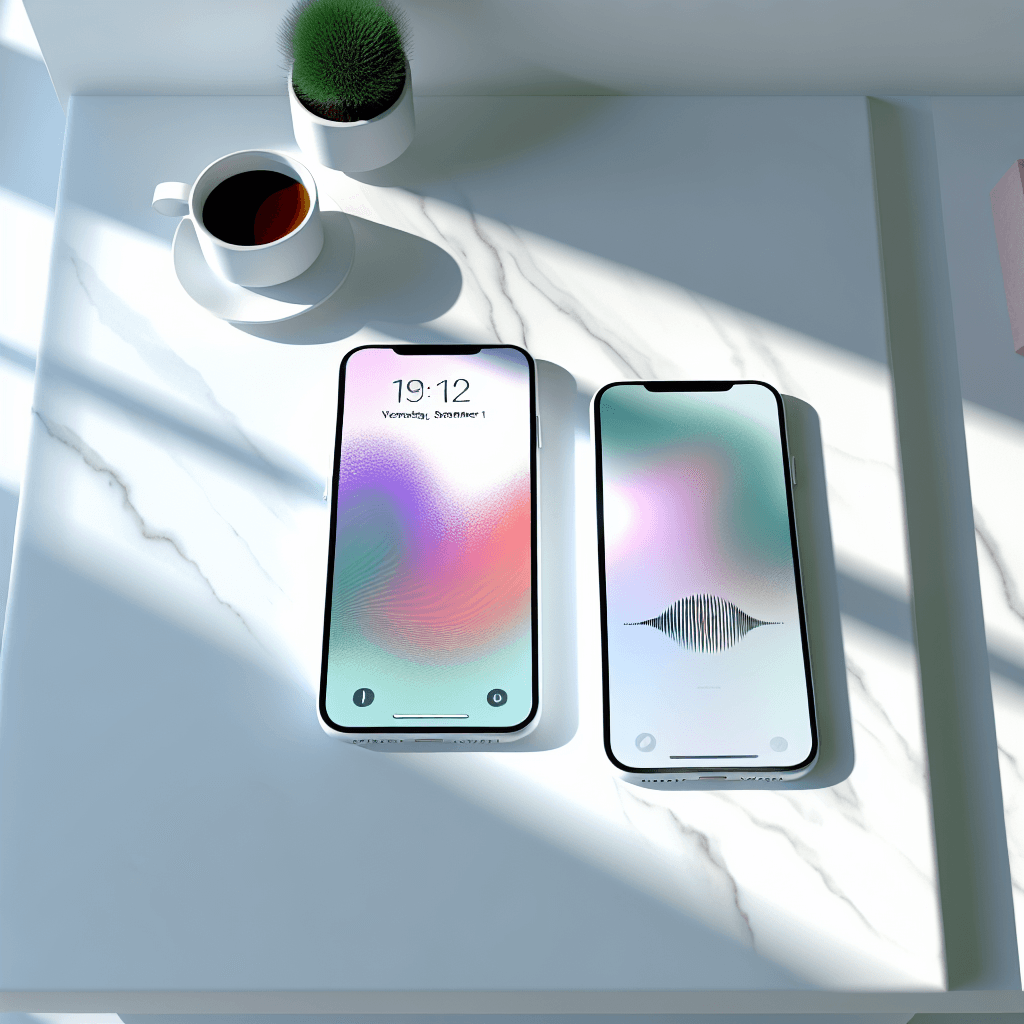
AI News Roundup: Apple Picks Google's Gemini to Power Siri's AI Future
Apple just made the most surprising partnership announcement in years. After months of speculation about whether Cupertino would build its own foundation models or partner with OpenAI, the iPhone maker chose Google. Gemini will power the next generation of Siri, and Google briefly touched a $4 trillion market cap on the news.
Meanwhile, the Pentagon announced it’s deploying both Grok and Google’s generative AI across military networks, and the healthcare AI race reached a fever pitch with both Anthropic and OpenAI launching major medical features within days of each other.
Here’s everything that matters from January 12-13, 2026.
The Big Story: Apple Bets on Google for AI-Powered Siri
Apple announced a multiyear partnership with Google to use Gemini models as the foundation for the next generation of Siri. In a statement that must have stung Cupertino’s pride, Apple acknowledged that “after careful evaluation, we determined that Google’s technology provides the most capable foundation for Apple Foundation Models.”
The deal represents a significant strategic shift. Apple has long prided itself on controlling its core technologies, and Siri’s AI capabilities have lagged behind competitors for years. Rather than continuing to play catch-up with in-house development, Apple is leveraging Google’s model capabilities while presumably maintaining control over the user experience and privacy layers.
For Google, the partnership is a massive validation. Following the announcement, Google briefly touched above a $4 trillion market valuation - a remarkable milestone that cements the company’s position in the AI race. The deal likely includes substantial licensing fees and positions Google’s Gemini as the backend for over a billion Apple devices.
The partnership also signals a new era of “co-opetition” in AI. Despite competing fiercely in search, browsers, and mobile operating systems, both companies recognize that AI infrastructure is becoming too complex and capital-intensive for any single company to dominate every layer of the stack.
Source: CNBC
Today’s Top Stories
Pentagon Deploys Grok Alongside Google AI
Defense Secretary Pete Hegseth announced that Elon Musk’s Grok AI will be integrated into Pentagon networks alongside Google’s generative AI tools, marking a major expansion of AI use across U.S. military systems.
The announcement came after a meeting between Hegseth and Musk at a SpaceX facility in Texas on January 12. The dual-vendor approach is notable - rather than selecting a single AI provider, the Pentagon is deploying multiple systems, potentially for different use cases or as redundant capabilities.
The move accelerates the military’s AI adoption while raising questions about oversight, security, and the growing entanglement between defense infrastructure and commercial AI providers.
Source: SOFREP
Healthcare AI Race Intensifies: Three Major Launches in 48 Hours
The healthcare AI battleground is heating up. Within days, three major announcements have transformed the landscape:
Anthropic unveiled Claude for Healthcare, a HIPAA-compliant toolkit with “connectors” providing AI access to the CMS Coverage Database, ICD-10 classifications, and PubMed. Chief Product Officer Mike Krieger emphasized reducing administrative burden, noting that “clinicians often report spending more time on documentation and paperwork than actually seeing patients.”
OpenAI acquired Torch, an AI healthcare app for viewing and analyzing health data, in a deal valued around $100 million. Combined with their ChatGPT Health feature - developed with input from 260+ physicians - OpenAI is building a comprehensive health data layer.
Over 40 million Americans already use AI chatbots for health advice daily, according to the Advisory Board. The question isn’t whether AI will transform healthcare - it’s who will own that relationship.
Sources: TechCrunch, Tech Startups, Advisory Board
Anthropic Launches Claude Cowork for Non-Developers
Building on their Claude Code success, Anthropic launched Claude Cowork - described as “Claude Code for the rest of your work.” The tool is available exclusively to Max subscribers ($100-$200/month) through the updated Claude Desktop macOS application.
The key differentiator is accessibility. While Claude Code requires comfort with terminal interfaces, Claude Cowork provides a less intimidating interface with built-in filesystem sandboxing using Apple’s Virtualization Framework to boot a custom Linux environment. It’s designed for knowledge workers who want agentic AI capabilities without the developer learning curve.
Source: Simon Willison’s Weblog
Deepgram Achieves Unicorn Status with $130M Series C
Voice AI company Deepgram raised $130 million in Series C funding at a $1.3 billion valuation, achieving unicorn status. The round was led by AVP with participation from Tiger Global, Madrona, In-Q-Tel (the CIA’s venture arm), Citi Ventures, and others.
Deepgram also acquired OfOne, a voice AI platform for drive-thru ordering, signaling expansion into real-world commercial applications. The investment reflects continued confidence in voice AI as a critical interface layer - particularly as AI agents become more prevalent and need reliable speech recognition and synthesis.
Source: Tech Startups
Quick Hits
-
Google Commerce AI: Google is adding checkout-style buy buttons across Gemini and AI Search, plus launching an open protocol for AI agents to communicate directly with retailer systems.
-
EU AI Enforcement Begins: The EU AI Office has launched its first wave of investigations into “systemic risk” models, including a formal investigation into Meta’s WhatsApp Business APIs.
-
GPT-5.2 Rollout: OpenAI is transitioning custom GPTs to GPT-5.2, though GPTs with custom actions will remain on GPT-4o and GPT-4.1.
-
Washington AI Legislation: Governor Bob Ferguson is pushing for AI chatbot regulations requiring chatbots to identify themselves as non-human and refer users to mental health services when appropriate.
-
Converge Bio Funding: Israeli AI drug discovery startup raised $25M Series A from Bessemer and executives from Meta, OpenAI, and Wiz.
-
CFOs Go All-In: Per Deloitte, 87% of CFOs say AI will be “extremely or very important” to finance operations in 2026, with plans to embed AI agents directly into workflows.
What This Means
The Apple-Google partnership is the headline, but the pattern is more interesting than the individual deal. We’re watching the AI industry stratify into distinct layers: foundation model providers (OpenAI, Anthropic, Google), platform integrators (Apple, Microsoft, enterprise SaaS), and application specialists (healthcare, voice, security). The healthcare AI race shows this clearly - both Anthropic and OpenAI are sprinting to own the regulated data layer before the other can establish dominance. Meanwhile, the Pentagon’s multi-vendor AI deployment and EU enforcement actions signal that governments are no longer content to watch from the sidelines. The “wild west” era of AI is ending, replaced by a more structured landscape where infrastructure, partnerships, and regulatory compliance matter as much as model capabilities.
Ready to automate your busywork?
Carly schedules, researches, and briefs you—so you can focus on what matters.
Get Carly Today →Or try our Free Group Scheduling Tool