What Is Tavus AI? PAL Maker and the Video Agents
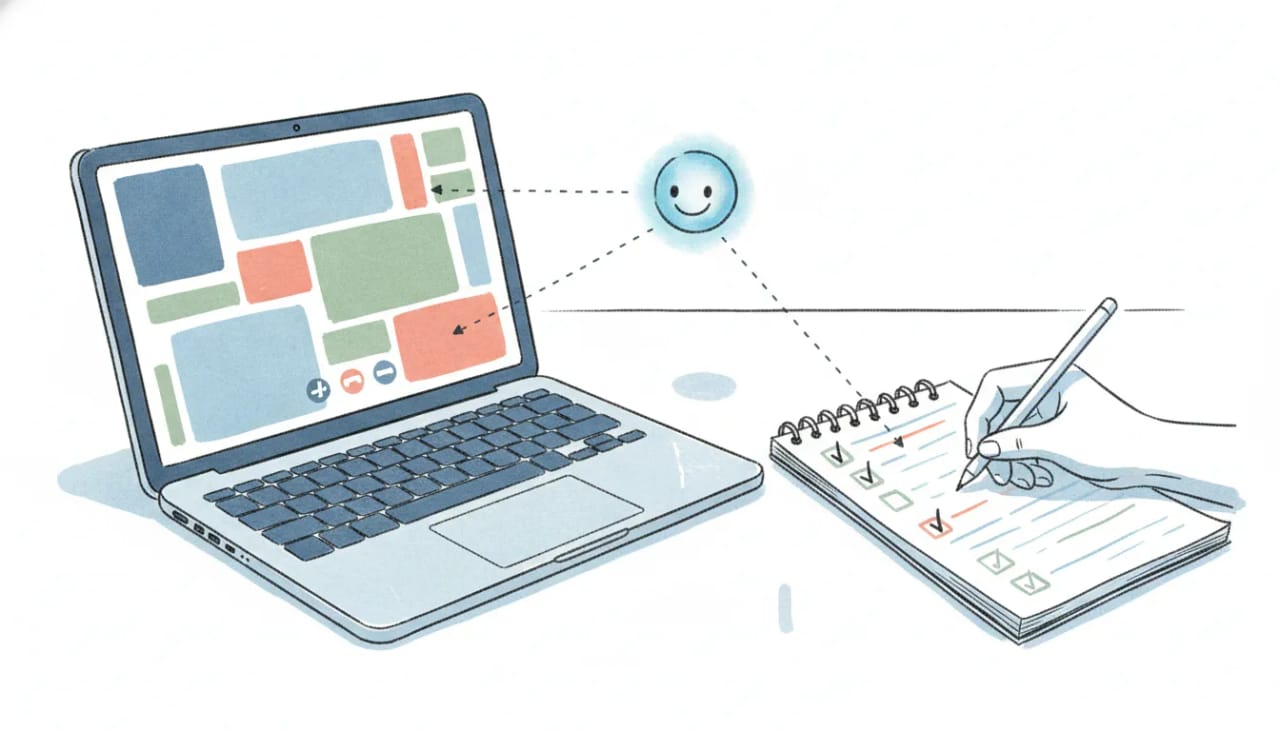
Tavus builds AI you talk to face to face. Not a chatbot with an avatar bolted on, and not a video generator that renders a clip you watch later. A Tavus agent appears on screen as a person, sees you through your camera, hears your tone, and answers in the pause where a human would have answered.
The company calls this “the human layer” of AI, and it recently shipped PAL Maker, a no-code way to build one of these agents by describing it in plain language. If you’ve landed here because you saw the launch and couldn’t tell what Tavus actually sells, this is the plain version.
What Tavus actually is
Tavus is an AI research lab and API platform. The product everything else sits on is the Conversational Video Interface (CVI): a real-time pipeline that takes a live video call and puts a synthetic human on the other end of it.
Two pieces make up an agent:
- The PAL is the behavior. Tavus expands it as Personality, Behavior, and Logic, and it covers the system prompt, the knowledge, the tools, the guardrails, and the conversation configuration.
- The Face is the likeness and voice on screen.
You configure a PAL once and reuse it across every conversation. Older Tavus material calls these “personas” and “replicas”; both names still work on the existing endpoints, so you’ll see the old vocabulary in tutorials and the new vocabulary in the current docs.
The company reports more than 100,000 developers on the platform and names Deloitte, Amazon, and Salesforce among its customers.
PAL Maker, the no-code builder
PAL Maker is the reason Tavus is in your feed. It is a conversational builder: you describe the agent you want to an AI named Charlie, Charlie assembles it while you steer, and you deploy it to a website or app. Three steps, framed as think it, build it, ship it.
It matters because it moves Tavus out of pure API territory. Before PAL Maker, standing up a video agent meant writing code against the CVI endpoints. Now the same configuration is reachable by describing it, and the API key you’d use for programmatic access is generated inside PAL Maker too. The no-code path and the developer path are the same platform, not separate products.
Tavus also ships an MCP server and a CLI, so a coding agent can build and test a PAL in a loop: adjust the configuration, run simulated conversation turns, judge the result, refine. That’s a genuinely unusual amount of surface area for a product whose headline feature is “no code.”
The three models underneath
Tavus develops its own models rather than composing off-the-shelf parts, and the split between them is the clearest way to understand what the product is doing.
Phoenix-4 renders the face. It generates full-face video at 40fps in 1080p, every pixel from head and shoulders down to individual blinks, and it drives more than ten emotional states with real-time transitions. Crucially it animates listening as well as speaking, so the agent nods and reacts while you’re the one talking. Phoenix-3, the previous version, ran at 30fps and had neither emotion control nor active listening.
Raven-1 handles perception. Instead of classifying you into a rigid bucket like “happy” or “sad,” it emits natural-language descriptions of emotional state and intent at sentence-level granularity, which the rest of the pipeline can act on.
Sparrow-1, released in January 2026, controls conversational timing. It predicts who owns the conversational floor frame by frame and decides when to listen, wait, or speak, so the agent responds when a human listener would rather than as fast as it possibly can. That single design choice is most of what separates a call that feels like a conversation from one that feels like a kiosk.
What a PAL can do in a call
Beyond talking, a PAL gets capabilities from two separate systems, and the distinction trips people up:
- Skills are pre-built and authored by Tavus. You toggle them on. The current registry is small and explicitly growing:
internet_searchfor live web lookups,presentationfor walking someone through a slide deck from your knowledge base, andmagic_canvasfor rendering interactive UI inside the live video, including questions, calendars, and charts, with the participant’s responses flowing back to the PAL and to your webhook. - Tools are functions you define and attach, up to 50 per PAL, delivered either as an app message or as a call to your own endpoint.
On top of that, PALs support a document knowledge base, memories that persist across separate conversations, guardrails for hard behavioral limits, objectives for goal-directed calls, and pronunciation dictionaries. A PAL can also join a Google Meet or Zoom call as a participant, with its own reserved username, which is the feature most likely to make someone’s roadmap.
Two different things are called PALs
This is the part worth reading twice, because Tavus uses one word for two products.
PAL Maker is the business and developer builder described above. Charlie’s PALs is a separate consumer product: Ashley, Noah, Sophie, Ryan, and Charlie, a fixed cast of AI companions with faces, voices, per-character memory, and a shared fictional world, available on the web and as a “PALs by Tavus” iOS app. They talk over video, voice, or SMS, and they’re built for company rather than for work.
If you’re evaluating Tavus for a business use case, the companion app is not what you want, and searching for “Tavus PALs” will hand you a mix of both.
What Tavus costs
Verified on the Tavus pricing page on July 30, 2026. Plans are billed per month and metered in minutes of conversational video, with paid tiers adding pay-as-you-go overage:
| Plan | Price | Conversational video | Custom replicas |
|---|---|---|---|
| Free | $0 | 20 minutes | none (stock only) |
| Starter | $22/mo | 60 minutes | 1 |
| Builder | $59/mo | 175 minutes | 3 |
| Growth | $397/mo | 1,300 minutes | 7 |
| Business | $975/mo | 4,000 minutes | 15 |
| Enterprise | Custom | Volume discounts | Dedicated |
The free tier includes the no-code platform, stock replicas, and support for 42+ languages, and it watermarks output. Watermark removal starts at Starter. Concurrency is the other thing that scales with price: one session on Starter, up to 10 on Growth, up to 15 on Business.
The pricing shape tells you the intended buyer. Minutes-based metering with a $397 tier in the middle is aimed at companies putting an agent in front of customers, not at individuals.
Who Tavus is for, and who it isn’t
Tavus fits when the face is the point. Sales coaching and role-play, customer support with a human presence, candidate screening, patient intake, learning and development, product demos that answer questions. If your requirement is “a person on screen who reacts,” there isn’t much else operating at this level of the stack.
It’s the wrong tool when the face is incidental. Most work automation has no video in it at all: triage the inbox, chase the unanswered thread, update the CRM record after the call, route an approval to the right person, run the same six steps every Monday. Those need connectors to email and calendar and a workflow engine, and rendering a synthetic human to do them adds cost and latency for nothing.
Worth being concrete about the boundary: Tavus is a video presence layer with tools you wire yourself. It is not an email or calendar assistant, and it isn’t marketed as one.
If what you actually need is an assistant working across your inbox, calendar, and the apps your team already uses, that’s a different category. Carly is an AI agent platform you reach over email, with 200+ native integrations plus bring-your-own-key for anything else with a public API. Free Zapier-style workflows; AI agents from $35/month.
FAQ
What does PAL stand for in Tavus?
Personality, Behavior, and Logic. It’s the behavioral configuration layer of an agent, separate from the Face, which supplies the on-screen likeness and voice.
Is Tavus the same as an AI video generator?
No. Tools like that render a finished clip you watch afterward. Tavus generates video in real time during a two-way conversation, and the agent perceives you while it’s happening.
Does Tavus have a free plan?
Yes. 20 minutes of conversational video per month, stock replicas, the no-code platform, and 42+ language support. Output is watermarked until you reach a paid tier.
Can a Tavus agent join my Google Meet or Zoom calls?
Yes. A PAL can be configured with a conferencing username and join as a participant. The number of configurations you get scales with your plan, from one on Starter up to 15 on Business.
Can a Tavus PAL take actions in my other apps?
Only ones you build. Tavus provides three toggleable Skills (internet search, presentations, Magic Canvas) and lets you attach up to 50 custom tools per PAL that call your own endpoints. There is no catalog of pre-built app connectors, so any integration with a CRM, inbox, or database is work you do.
What’s the difference between Phoenix, Raven, and Sparrow?
Phoenix-4 renders the face, Raven-1 perceives emotion and intent, and Sparrow-1 decides when to speak. They run together in the same pipeline.
Ready to automate your busywork?
Carly schedules, researches, and briefs you—so you can focus on what matters.
See what people say
"Before Carly, I relied on a Calendly link, but the whole process felt impersonal and not very professional. Carly changed that by handling all the back-and-forth, so I'm no longer stuck in endless email threads trying to line up schedules.
Now Carly reaches out to candidates, shares my real-time availability, lets them pick a slot, then sends a Zoom link and drops it straight into my calendar. She sends reminders to both of us before each call, which has significantly reduced no-shows and last-minute confusion.
On top of scheduling, Carly acts like a full executive assistant, sending me my schedule the night before so I can prepare for each call. It reminds me of the old x.ai assistant, but Carly is noticeably smarter, faster, and better suited to my healthcare recruitment business."