8 Best Salesforce Alternatives in 2026 (Cheaper & Simpler)
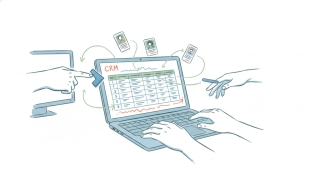
Salesforce is still the most powerful CRM on the market, and for a lot of teams that’s exactly the problem. After the roughly 6% list-price bump in August 2025, Sales Cloud and Service Cloud Enterprise now sit at $165 per user per month, Unlimited runs $330, and even that doesn’t include the AI. Agentforce moved to a consumption model — standard agent actions cost about $0.10 each (Flex Credits sell at $500 per 100,000), so the more your “digital labor” works, the more the bill grows, and it’s hard to predict in advance. Add the implementation partners, the admin you have to hire, and the “every small change feels like a project” tax, and it’s no surprise teams start looking. Here are eight Salesforce alternatives worth switching to in 2026, sorted so you can find the one that fits your team’s size and budget.
1. HubSpot
The most common landing spot for teams leaving Salesforce — an all-in-one platform that bundles CRM, marketing, sales, and service, with a genuinely usable free tier.
What makes it different from Salesforce: HubSpot is built to be self-serve. Reps and admins can configure most of it without a certified consultant, the free CRM covers 2 users at no cost, and the interface doesn’t require weeks of training. You trade some of Salesforce’s infinite customization for something your team will actually adopt. See the full breakdown in our HubSpot vs Salesforce comparison.
Best for: SMBs and mid-market teams that want marketing and sales in one place without a Salesforce admin on payroll.
Pricing: Free for 2 users; Sales Hub Starter $15/seat/mo (annual), Professional $90/seat/mo (annual, plus a $1,500 onboarding fee), Enterprise $150/seat/mo
2. Zoho CRM
The value pick — Enterprise-grade features at a fraction of Salesforce’s list price, and part of a huge suite of connected business apps.
What makes it different from Salesforce: Zoho Enterprise is $40/user/month against Salesforce’s $165 for a broadly comparable feature set — automation, forecasting, and its Zia AI included. It’s free for up to 3 users, and if you already run Zoho Books, Desk, or Projects, everything shares one data layer.
Best for: Cost-conscious teams that want deep functionality without enterprise pricing.
Pricing: Free up to 3 users; Standard $14/user/mo, Professional $23/user/mo, Enterprise $40/user/mo, Ultimate $52/user/mo (annual billing)
3. Pipedrive
A sales-first CRM built around a visual pipeline, designed so reps spend time selling instead of doing data entry.
What makes it different from Salesforce: Pipedrive does one thing — move deals through stages — and does it without the sprawl. There’s no marketing cloud, no service cloud, no forest of settings; setup takes an afternoon rather than a quarter. It’s the anti-Salesforce for teams that were drowning in configuration. Compare them directly in Pipedrive vs Salesforce.
Best for: Small and mid-size outbound sales teams that want a clean, drag-and-drop pipeline.
Pricing: Lite $14/seat/mo, Growth $39/seat/mo, Premium $49/seat/mo, Ultimate $79/seat/mo (annual billing)
4. monday CRM
The flexible “work OS” approach — a CRM built on monday.com’s colorful, spreadsheet-style boards that you shape to fit your process.
What makes it different from Salesforce: Instead of bending your workflow to a rigid object model, you build the CRM you want by dragging columns and automations around. It’s far more approachable than Salesforce for non-technical teams, and the same platform runs your projects and operations if you want it to. Note the 3-seat minimum on paid tiers.
Best for: Teams that want a customizable CRM they can configure themselves, especially if they already use monday for work management.
Pricing: Free plan available; Basic $12/seat/mo, Standard $17/seat/mo, Pro $28/seat/mo (annual, 3-seat minimum), Ultimate custom
5. Freshsales
Freshworks’ sales CRM with a built-in AI assistant (Freddy) at a price that undercuts almost everyone.
What makes it different from Salesforce: Freddy AI — lead scoring, deal insights, email drafting — is baked in on paid plans rather than sold as a metered add-on, so you’re not budgeting for AI credits on top. Growth starts at $9/user/month, and there’s a free tier for very small teams. Built-in phone and email keep the stack simple.
Best for: Small sales teams that want AI-assisted selling without Salesforce’s Einstein/Agentforce price tags.
Pricing: Free tier; Growth $9/user/mo, Pro $39/user/mo, Enterprise $59/user/mo (annual billing)
6. Microsoft Dynamics 365 Sales
The enterprise alternative for Microsoft shops — a full-featured CRM that lives natively inside the Microsoft 365 and Teams world.
What makes it different from Salesforce: If your company runs on Outlook, Teams, and Excel, Dynamics keeps CRM in the same ecosystem instead of forcing a second one alongside it. As of 2026, Copilot for Sales is included in the Dynamics 365 Sales license at no extra per-user uplift, with a block of Copilot Credits per Premium seat — a friendlier AI story than metering every action.
Best for: Enterprises already standardized on Microsoft that want CRM in the same stack.
Pricing: Sales Professional $65/user/mo, Sales Enterprise $105/user/mo (Premium tier higher; Copilot for Sales included)
7. Attio
The modern, AI-native CRM — a fast, data-model-flexible system that feels built for 2026 rather than retrofitted into it.
What makes it different from Salesforce: Attio auto-builds and enriches records from your email and calendar, and its AI research and workflow agents come standard on every plan rather than as consumption credits. It’s the CRM startups pick when Salesforce feels like enterprise software from a decade ago. See how it stacks up in Attio vs HubSpot.
Best for: Startups and modern go-to-market teams that want an AI-first CRM with a flexible data model.
Pricing: Free for 3 seats; Plus $29/seat/mo, Pro $69/seat/mo, Enterprise custom (annual billing)
8. Close
A CRM built for high-volume inside sales, with calling, SMS, and email sequences native instead of bolted on.
What makes it different from Salesforce: In Salesforce you’d buy and wire up a dialer, a sequencing tool, and a texting add-on; Close ships all of that in the box, so an SDR can run their whole day from one screen. It’s opinionated toward outbound teams rather than trying to be everything to everyone.
Best for: Startups and SMB sales teams doing heavy outbound calling and follow-up.
Pricing: Solo $9/user/mo, Essentials $35/user/mo, Growth $99/user/mo, Scale $139/user/mo (annual billing; call/SMS usage billed separately)
The common thread across every option here is that the CRM is only as useful as how well it’s kept up to date — and that’s the job most reps hate. An AI executive assistant like Carly can sit on top of whichever one you choose, logging calls, updating deal stages, and drafting follow-ups from your email and meeting notes so the data stays clean without the busywork.
Whichever CRM you land on, Carly can hook right in — native integrations for HubSpot, Pipedrive, and Salesforce itself, plus bring-your-own API key for anything else.
Salesforce Alternatives Compared
| Tool | Best for | AI approach | Starting price (annual) |
|---|---|---|---|
| HubSpot | All-in-one SMB/mid-market | Included on paid tiers | Free / $15 seat |
| Zoho CRM | Best value | Zia included | Free / $14 user |
| Pipedrive | Simple sales pipeline | Add-on | $14 seat |
| monday CRM | DIY customization | Included on higher tiers | Free / $12 seat |
| Freshsales | AI-assisted, low cost | Freddy included | Free / $9 user |
| Dynamics 365 Sales | Microsoft enterprises | Copilot included | $65 user |
| Attio | AI-native startups | Standard on all plans | Free / $29 seat |
| Close | Outbound inside sales | AI agent add-on | $9 user |
| Salesforce | Large, complex orgs | Agentforce metered per action | $165 user |
FAQ
What is the cheapest alternative to Salesforce? For paid plans, Freshsales ($9/user/mo) and Zoho CRM Standard ($14/user/mo) are the lowest-cost serious options. If you want free, HubSpot’s free CRM (2 users), Zoho (3 users), monday, and Attio (3 seats) all have no-cost tiers to start with.
Which Salesforce alternative is closest for enterprises? Microsoft Dynamics 365 Sales is the nearest enterprise-grade replacement, especially for companies already on Microsoft 365. For teams that want enterprise features at a lower price, Zoho CRM Enterprise ($40/user/mo) covers a lot of the same ground.
Why do teams leave Salesforce in 2026? The most common reasons are cost (Enterprise now lists at $165/user/mo, and Agentforce AI is metered per action via Flex Credits), complexity (“every small change feels like a project”), and the need for a dedicated admin or consultant to run it. For a deeper feature-by-feature look, see HubSpot vs Salesforce.
Do I have to give up AI features if I switch off Salesforce? No. Freshsales (Freddy), Attio, Zoho (Zia), and Dynamics (Copilot) all include AI in their plans rather than metering it by the action, and most of the tools here have a supported AI CRM assistant option to keep records updated automatically.
Ready to automate your busywork?
Carly schedules, researches, and briefs you—so you can focus on what matters.
See what people say
"Before Carly, I relied on a Calendly link, but the whole process felt impersonal and not very professional. Carly changed that by handling all the back-and-forth, so I'm no longer stuck in endless email threads trying to line up schedules.
Now Carly reaches out to candidates, shares my real-time availability, lets them pick a slot, then sends a Zoom link and drops it straight into my calendar. She sends reminders to both of us before each call, which has significantly reduced no-shows and last-minute confusion.
On top of scheduling, Carly acts like a full executive assistant, sending me my schedule the night before so I can prepare for each call. It reminds me of the old x.ai assistant, but Carly is noticeably smarter, faster, and better suited to my healthcare recruitment business."