The Meeting Bot Is Now Exhibit A: Why AI Notetakers Became a Legal Liability
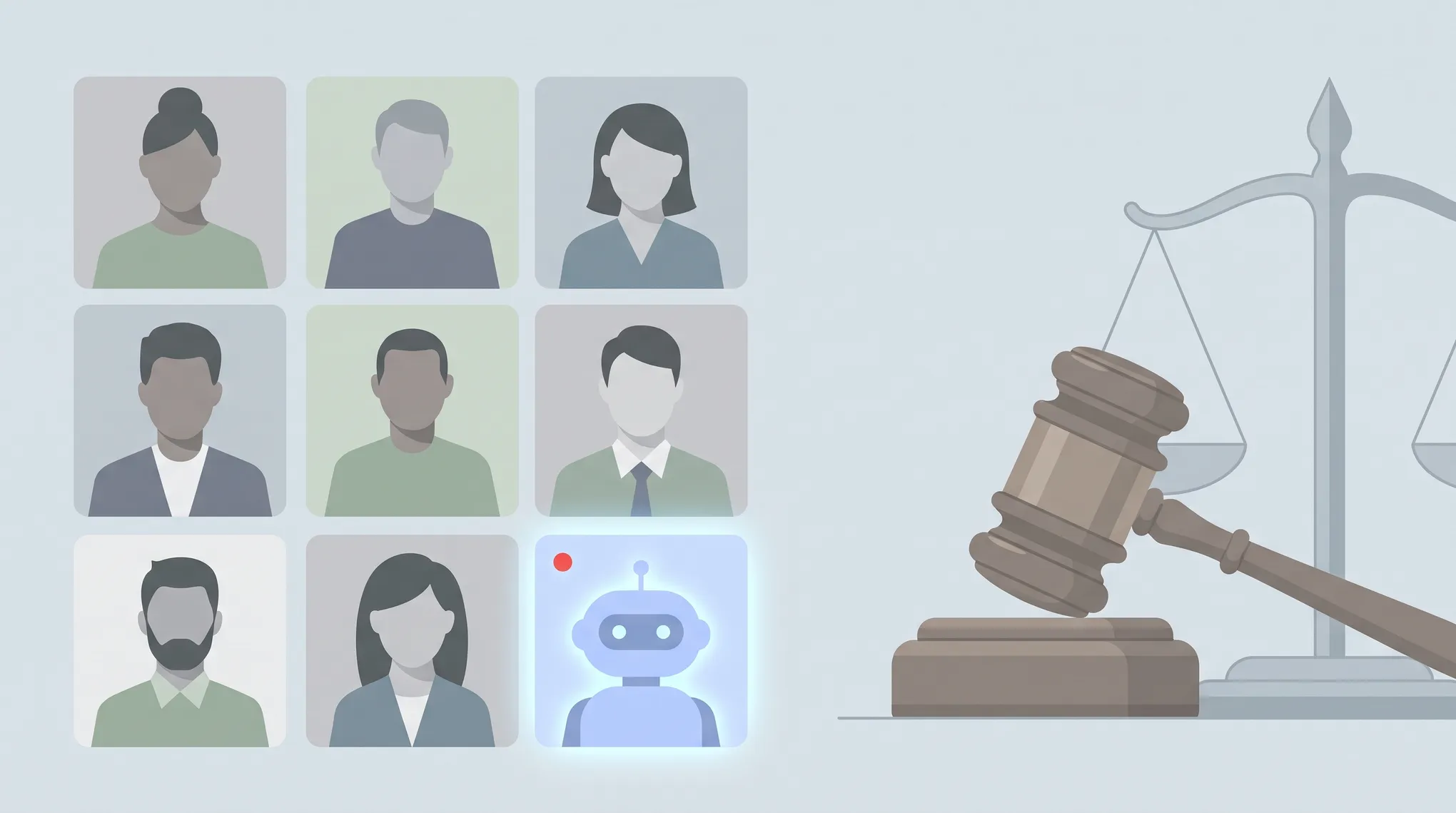
For two years the pitch was irresistible: drop an AI bot into every call, let it transcribe, and never take a note again. In 2026 that same bot is showing up somewhere less convenient — as evidence. As PYMNTS put it, the meeting bot nobody invited is now Exhibit A, and the legal exposure that was once a footnote in a vendor’s terms of service is now the headline.
Otter’s day in federal court
The case to watch is In re Otter.AI Privacy Litigation (No. 5:25-cv-06911, N.D. Cal.), a consolidated federal class action alleging that OtterPilot auto-joined and recorded Zoom, Microsoft Teams, and Google Meet calls without the consent of everyone on the line. The motion-to-dismiss hearing was held on May 20, 2026 before Judge Lee — the first federal test of whether decades-old wiretap statutes actually reach an AI notetaker.
The mechanics are what make plaintiffs’ lawyers comfortable. An auto-joiner doesn’t ask permission from each participant; it shows up because one person connected it to their calendar, and it captures the audio of everyone in the room. Wiretap laws in California and other two-party-consent states were written for exactly that scenario — interception without the consent of all parties — long before anyone imagined a piece of software would be the one doing the intercepting.
Fireflies is fighting on a different front. In Cruz v. Fireflies.AI, filed in December 2025, the claim is brought under Illinois’s Biometric Information Privacy Act, alleging the service generated voiceprints from meeting audio without consent. BIPA is the statute that has produced some of the largest privacy settlements in the country, and a human voice, once turned into a biometric identifier, falls squarely inside it. Together the two cases attack the notetaker model from both ends: the recording itself, and the biometric data extracted from it.
The “capability test” is the part that should scare vendors
The most consequential development isn’t a single ruling — it’s the legal theory courts are converging on. As Basil AI’s analysis of the CIPA cases lays out, judges are coalescing around a “capability test” drawn from Ambriz v. Google (February 2025): a vendor’s mere technical ability to exploit recorded data can count as unauthorized interception, regardless of whether it actually did.
That reframes the entire risk calculus. Under a capability standard, a notetaker company can’t defend itself by promising it didn’t sell the transcripts or train on the audio. If the architecture could mine that data, the interception may already have happened in the eyes of the law. For a category whose entire product is “we capture and process everyone’s voice,” that is an uncomfortable place to be standing.
Why IT just started saying no
Security and compliance teams have done the obvious math. As UC Today reports on the Otter trial and the notetaker industry, organizations are increasingly banning third-party auto-joiner bots outright — blocking unknown participants from Zoom, Google Meet, and Teams sessions rather than litigate consent after the fact. When a single employee’s convenience tool can pull the whole company into a wiretapping class action, “no uninvited bots” becomes the cheapest policy in the building.
None of this is settled. These are unresolved cases; the Otter hearing happened, but a motion-to-dismiss ruling decides only whether claims can proceed, not whether anyone broke the law. This isn’t legal advice. But the direction of travel is clear enough that betting your meeting workflow on an auto-recording bot now means betting on how a handful of judges read interception statutes written before smartphones existed.
Prep and follow-up without a bot in the room
The deeper question is whether sending a recorder into every call was ever the right design. The value most people actually want from meetings sits on either side of the call: walking in prepared, and not dropping the follow-ups afterward. Neither requires capturing the audio of people who never agreed to be recorded.
That’s the model Carly is built around. As an AI executive assistant running across both Gmail and Outlook, Carly briefs you before a meeting using your own calendar and inbox — who you’re meeting, the recent thread, what’s outstanding — and handles the scheduling and email follow-up afterward. It works from the context you already have access to, not from a microphone pointed at every other participant. It isn’t a transcription service, and that’s the point: there’s no uninvited bot joining the call to capture everyone’s voice, and nothing for the other side’s IT policy to block. (For the broader category, here are the best AI inbox management tools.) Carly starts at $35/month.
The notetaker era ran on an assumption that’s now being tested in court: that you can record everyone in a meeting because one person clicked yes. The vendors built billion-dollar products on it. The plaintiffs are arguing it was never that simple, and the capability test suggests at least some judges are listening.
Ready to automate your busywork?
Carly schedules, researches, and briefs you—so you can focus on what matters.
See what people say
"Before Carly, I relied on a Calendly link, but the whole process felt impersonal and not very professional. Carly changed that by handling all the back-and-forth, so I'm no longer stuck in endless email threads trying to line up schedules.
Now Carly reaches out to candidates, shares my real-time availability, lets them pick a slot, then sends a Zoom link and drops it straight into my calendar. She sends reminders to both of us before each call, which has significantly reduced no-shows and last-minute confusion.
On top of scheduling, Carly acts like a full executive assistant, sending me my schedule the night before so I can prepare for each call. It reminds me of the old x.ai assistant, but Carly is noticeably smarter, faster, and better suited to my healthcare recruitment business."