SharePoint MCP: Official, Gated Behind Copilot
Yes, Microsoft has an official SharePoint MCP — but it’s not a quick toggle. Under its Agent 365 platform, Microsoft ships a first-party MCP server called Work IQ SharePoint (mcp_SharePointRemoteServer), built directly on the Microsoft Graph API for sites, document libraries, and lists. It’s genuinely first-party and documented on Microsoft Learn. It’s also, as of mid-2026, still a preview feature, restricted to organizations with a Microsoft 365 Copilot license, and only reachable after an IT admin registers an enterprise app in your Microsoft Entra tenant. There’s no version of this for a personal Microsoft account or a SharePoint site outside a managed tenant.
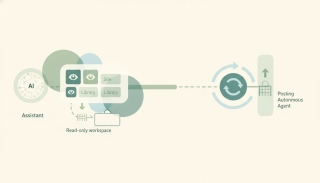
The thing worth knowing before you chase it down: an MCP server hands your sites, files, and lists to an AI inside a conversation you start. It’s a doorway, not a worker. Nothing watches SharePoint for you, nothing fires when a document changes or a list item gets added, and nothing runs while the chat is closed. Here’s exactly what the SharePoint MCP does, how to actually turn it on, where it stops — and what to use when you want SharePoint work that runs on its own.
See also: the full MCP server list — which apps have one, and what each can reach.
What the SharePoint MCP server does
Model Context Protocol (MCP) is the open standard that lets an AI client talk to an outside app through a shared interface. Microsoft’s official server sits inside Agent 365, its enterprise platform for governed AI agents, under a set of tools it calls Work IQ:
- Work IQ SharePoint (
mcp_SharePointRemoteServer) — find and browse sites, list document libraries and folders, read and create files (up to 5 MB), rename/move/copy/delete files and folders, share files and lists with other people, and fully manage SharePoint lists — creating lists, columns, and items, and reading, updating, or deleting them.
With it connected, an MCP-compatible AI client can genuinely act, not just describe. It can search across every site and library you have access to, pull a file’s metadata from a sharing URL, upload a file straight from a SharePoint or OneDrive link, apply a sensitivity label, or add a row to a tracking list — all through around 30 discrete tools covering the three things most people actually do in SharePoint: manage documents, manage sharing and permissions, and manage list-based data.
The catch is where it lives: Work IQ SharePoint is reachable through Microsoft Copilot Studio, Microsoft Foundry, or — for developer tools like Claude Code, GitHub Copilot CLI, and VS Code — a remote endpoint at agent365.svc.cloud.microsoft that your organization has to stand up first.
How to set up the SharePoint MCP server
This is the part where “official” doesn’t mean “easy.” Two paths exist, and neither is a five-minute OAuth click:
- Low-code, inside Copilot Studio or Foundry. Your organization needs a Microsoft 365 Copilot license. You add “Work IQ SharePoint” as a tool on an agent, create a connection, and sign in with your work account.
- Developer access from Claude Code, GitHub Copilot CLI, or VS Code. An admin registers an enterprise application in Microsoft Entra, grants it the matching Work IQ SharePoint permission, and hands you a tenant ID and client ID. You drop those into an
.mcp.jsonfile pointing at the tenant-scopedmcp_SharePointRemoteServerendpoint, authenticate, and you’re in.
Either way you need a Microsoft 365 Copilot license, a Microsoft Entra tenant, and an admin willing to register and consent to the connection. None of this applies to a personal Microsoft account or a site outside a managed tenant — there’s no official path there. People without a Copilot license typically reach for community-built MCP servers that wrap the Microsoft Graph API directly with their own OAuth app; they work, but they’re unofficial and unmanaged by Microsoft.
Where the SharePoint MCP stops
Four limits show up regardless of which path you take:
- It only works inside a chat you start. Close the window and nothing happens. The AI doesn’t watch a document library; it waits for you to ask.
- No triggers. A new file landing in a library, a list item changing status, a document getting shared externally — none of these can start anything through MCP. There’s no “when this happens in SharePoint, do that.”
- It’s gated, not universal. Work IQ SharePoint only works for organizational tenants that already have Copilot licensing and admin buy-in, file operations top out at 5 MB, and Microsoft’s own docs flag the whole server as preview — meaning tool names and behavior can still change.
- You own the plumbing. Enterprise app registration, tenant IDs, OAuth scopes, and the blast radius of read/write/delete access to real sites and libraries are all on your IT admin, not on you.
So the official SharePoint MCP is a real way to let a governed AI agent search, read, and edit sites, files, and lists inside a Microsoft-managed conversation. It is not a way to make SharePoint run — to have work happen on a schedule or in reaction to an event, without a licensed, admin-provisioned session open.
Running SharePoint work that doesn’t need a chat open
That “run on its own, across apps” gap is exactly where Carly fits. Carly connects to SharePoint natively — no Copilot license, no Entra app registration, no admin ticket — and to the ~260 other apps it supports, plus anything with a public API through your own key. The difference from MCP is the important part: Carly’s workflows are triggered and scheduled, so SharePoint work happens whether or not anyone has a chat window open, and without an IT admin standing up an enterprise app first.
A few things that MCP can’t do but a Carly workflow can:
- When a contract lands in a document library → extract the key terms, log a row in the tracking list, and notify the deal owner in Slack — automatically, the moment the file appears.
- Every Friday afternoon → summarize which list items changed status that week and email the digest to the project team.
- When a file gets shared externally → flag it to the compliance channel and log the recipient and file name in a separate audit list.
The non-AI steps — the moving, matching, and routing between apps — are free, the Zapier-style backbone of the workflow. The AI steps (drafting, summarizing, deciding) start at $35/month. You describe the outcome in plain language and Carly wires up the SharePoint connection and everything downstream — no tenant admin required.
If you’re on a Microsoft 365 Copilot license and want a governed AI agent to search and edit sites and lists inside Copilot Studio or Foundry, the official Work IQ SharePoint server is the right — if involved — tool. If you want SharePoint to actually do things on a trigger or a schedule, across every app a document or list touches, that’s the job Carly was built for.
FAQ
Does SharePoint have an official MCP server?
Yes. Microsoft ships a first-party MCP server called Work IQ SharePoint (mcp_SharePointRemoteServer) under its Agent 365 platform, built on the Microsoft Graph API for sites, document libraries, files, and lists. As of mid-2026 it’s a preview feature.
Is the SharePoint MCP server available for personal accounts? No. It requires a Microsoft 365 Copilot license and an organizational Microsoft Entra tenant. There’s no official version for a personal Microsoft account or an unmanaged site.
Can the SharePoint MCP trigger automations? No. MCP is request/response inside an AI chat — nothing runs when the conversation is closed, and Work IQ has no event triggers. For file- or list-driven work across apps, you need a workflow tool like Carly rather than an MCP server.
Can I connect SharePoint to AI without coding or hosting a server? Yes. You don’t need a Copilot license, an Entra admin, or MCP at all. Carly connects to SharePoint for you and lets you build the automation in plain language — describe what you want to happen and it wires up the SharePoint connection and the other apps involved, with no server to host and no code to write.
Ready to automate your busywork?
Carly schedules, researches, and briefs you—so you can focus on what matters.
See what people say
"Before Carly, I relied on a Calendly link, but the whole process felt impersonal and not very professional. Carly changed that by handling all the back-and-forth, so I'm no longer stuck in endless email threads trying to line up schedules.
Now Carly reaches out to candidates, shares my real-time availability, lets them pick a slot, then sends a Zoom link and drops it straight into my calendar. She sends reminders to both of us before each call, which has significantly reduced no-shows and last-minute confusion.
On top of scheduling, Carly acts like a full executive assistant, sending me my schedule the night before so I can prepare for each call. It reminds me of the old x.ai assistant, but Carly is noticeably smarter, faster, and better suited to my healthcare recruitment business."