Zapier MCP: What It Does and What Each Call Costs
Zapier MCP gives an AI assistant the ability to take actions in 9,000+ apps through one connection, and every tool call it makes costs two tasks from the same quota your Zaps draw on. That metering rule is the most important thing to understand before wiring it up, because it is the difference between a cheap experiment and a plan upgrade.
What it is
MCP is the Model Context Protocol, the open standard for connecting AI assistants to external tools. Zapier’s implementation turns its integration catalog into an endpoint your assistant can call: 9,000+ apps and 30,000+ actions, reached with credentials Zapier already holds.
Zapier reports 195,000+ MCP servers created and 4.6 million tool calls completed, which makes it one of the more widely deployed MCP endpoints in production rather than a preview.
Supported clients are Claude, ChatGPT, and Cursor, plus others that speak MCP. Setup is a guided flow rather than a config file: you pick your client, connect, and the app connections already in your Zapier account come along automatically.
The distinction that trips people up
A Zap and an MCP tool call are not the same shape of thing, and the difference is about who starts the work.
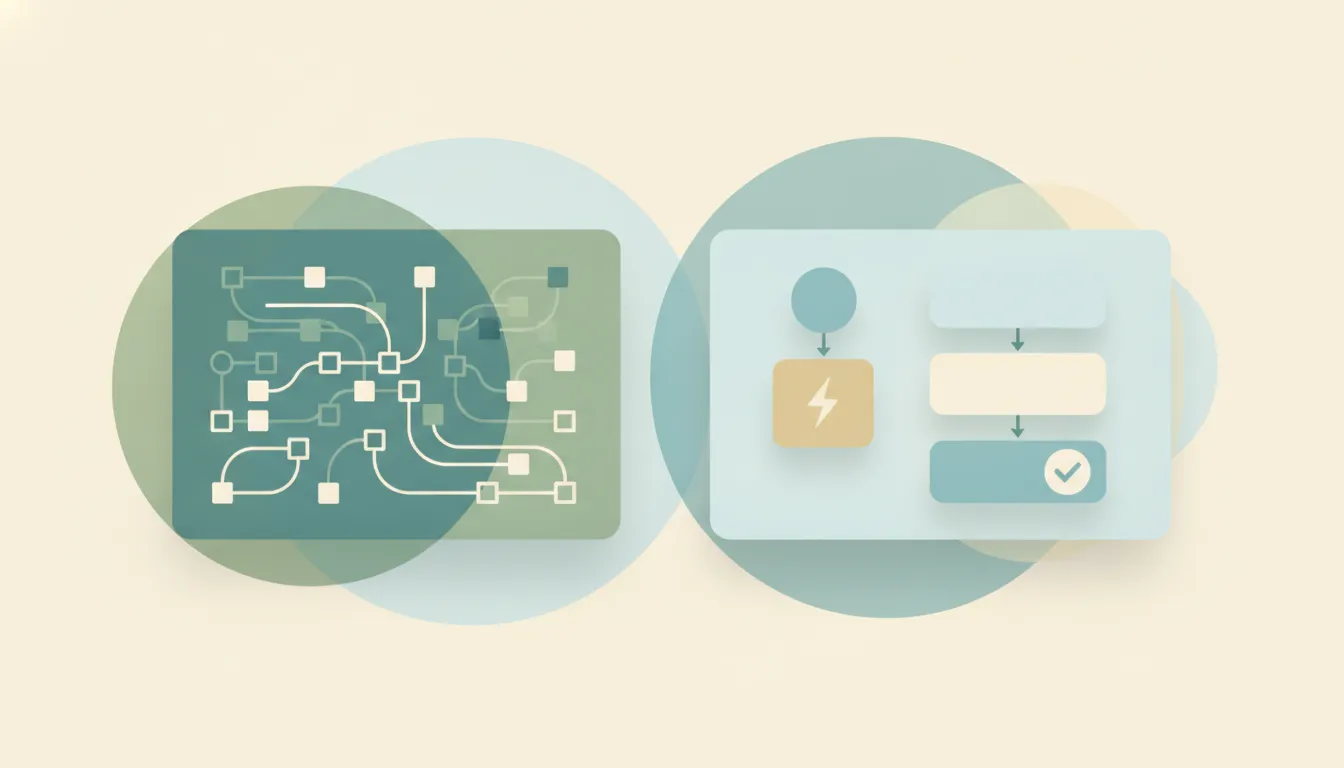
A Zap runs on a trigger. Something happens in an app, and Zapier reacts without anyone present. Zapier MCP is the opposite: it waits to be asked. Your assistant decides, mid-conversation, that it needs to send an email or update a row, and calls the tool.
That is a property of the protocol, not a gap in Zapier’s build:
MCP has no trigger and no scheduler. Its own Triggers and Events working group opens by conceding that clients learn about server-side changes by polling or by holding a connection open, and the specification work for a callback mechanism is still listed as ideating rather than shipped. Carly supplies the missing half: connect it and the workflows that start on an event run behind whatever assistant you already use.
So MCP is how an assistant acts on demand. If you need something to happen because an event occurred, that is still a Zap, or another scheduler.
What each call costs
This is the part worth doing arithmetic on. From Zapier’s task usage rates:
| What runs | Task cost |
|---|---|
| Zapier MCP tool call | 2 tasks per call |
| Standard Zap step | 1 task |
| Built-in tools (Formatter, Paths, Filters, Delay, Looping, Sub-Zaps, Digests, Storage, Tables, Forms) | 0 tasks |
| Code by Zapier step | 1 task |
| AI by Zapier, standard model | 1 task |
| AI by Zapier, advanced model | 3 tasks |
| AI by Zapier, premium model | 5 tasks |
| Lead Router step | 5 tasks per step |
Zapier states it plainly: “Each MCP tool call uses two tasks from your plan’s quota — the same task bucket your Zaps use.” There is no separate MCP product to buy and no new contract, and the task pool is shared across Zap workflows, AI steps, code, MCP, and the SDK.
A tool call costs double what a Zap step costs. That is the single number to carry into your own estimate.
What that means on each plan
Zapier’s plans start with a Free tier at 100 tasks per month, then Professional from $19.99/month and Team from $69/month, with task volume selected on a slider.
At two tasks per call, a Free account gets 50 MCP tool calls a month. That is enough to prove the concept and not enough to use it daily.
The consumption pattern is what makes this sharper than it looks. Agents rarely make one call per request. An assistant that checks your calendar, reads two emails, and updates a CRM record has made four calls and spent eight tasks on a single instruction. A chatty agent loop can burn a month of Free tier in an afternoon.
Zapier also notes that rates “may change over time as we introduce new capabilities or update how tasks are measured,” with changes announced before they apply. Treat the two-task figure as current rather than permanent.
Where the governance argument lands
The strongest case for Zapier MCP is not the app count. It is that one connection covers every assistant your team uses, under one set of managed credentials.
Zapier’s pitch to IT is that agents are already reaching business tools, and the question is whether that happens under anyone’s rules. Account-level restrictions, managed connections, and workspace controls apply across Claude, ChatGPT, and Cursor alike, with a history log to check. Credentials stay in Zapier’s infrastructure rather than being handed to each assistant separately.
If you are choosing between wiring six per-app MCP servers into three different clients or running one governed endpoint, that consolidation is the real product.
Setting it up
The flow has three steps and no terminal:
- Choose your AI client and connect Zapier MCP to it.
- Your existing Zapier app connections are added automatically.
- Ask your assistant to do something; it calls the matching action and reports back.
In ChatGPT, Zapier MCP goes in as a custom MCP app. Turn on Developer mode under Settings → Security and login, open Plugins, click +, and choose Create app → Create MCP App. Paste https://mcp.zapier.com/api/v1/connect as the server URL, leave authentication on OAuth, tick the risk acknowledgement, and sign in to Zapier when prompted.
You choose which apps the assistant can reach and can approve or block actions. Zapier estimates about five minutes, and the guided setup is the point of difference against developer-first alternatives that expect JSON editing and manual OAuth.
Developers are not shut out. Zapier says MCP gives them the same 30,000+ actions via the standard, with technical documentation covering server configuration and framework integration. If you are writing code rather than chatting, the Zapier SDK is the other half of that story, and it is currently free in beta rather than metered per call.
If what you want automated is your own day
There is a category difference hiding inside “connect your AI to your apps.” Zapier MCP is infrastructure: it gives whatever assistant you already use a much longer reach.
If the actual goal is an assistant that handles your inbox, your calendar, and your follow-ups without you starting the conversation each time, that is a different product shape. Carly is an AI executive assistant built around event triggers rather than on-demand calls, so work starts when mail arrives or an invite lands. Free Zapier-style workflows; AI agents from $35/month.
Frequently asked questions
Does Zapier MCP cost extra?
No separate purchase. It draws on your existing task quota at two tasks per tool call, shared with Zaps, AI steps, code, and the SDK.
Can Zapier MCP trigger on an event?
No. MCP has no trigger mechanism, so the assistant has to ask. Use a Zap for anything that needs to start on its own.
How many MCP calls does the free plan allow?
The Free tier includes 100 tasks per month, which is 50 tool calls at two tasks each.
Which AI tools work with it?
Claude, ChatGPT, and Cursor are named, and the connection is client-agnostic, so switching assistants does not mean rebuilding it.
Is Zapier MCP usable by developers?
Yes. It exposes 30,000+ actions across 9,000+ apps through the MCP standard, with published technical documentation for server configuration and framework integration.
Related: What is MCP · MCP servers · Zapier SDK · Zapier pricing · Claude + Zapier
Ready to automate your busywork?
Carly schedules, researches, and briefs you—so you can focus on what matters.
See what people say
"Before Carly, I relied on a Calendly link, but the whole process felt impersonal and not very professional. Carly changed that by handling all the back-and-forth, so I'm no longer stuck in endless email threads trying to line up schedules.
Now Carly reaches out to candidates, shares my real-time availability, lets them pick a slot, then sends a Zoom link and drops it straight into my calendar. She sends reminders to both of us before each call, which has significantly reduced no-shows and last-minute confusion.
On top of scheduling, Carly acts like a full executive assistant, sending me my schedule the night before so I can prepare for each call. It reminds me of the old x.ai assistant, but Carly is noticeably smarter, faster, and better suited to my healthcare recruitment business."