Zoom MCP: The Official Server and What It Reads
Yes — Zoom has an official MCP server. It’s hosted by Zoom itself, documented at developers.zoom.us/docs/mcp, and as of a May 2026 expansion it gives MCP-compatible AI tools like Claude and ChatGPT access to meeting summaries, transcripts, recordings, notes, and action items — plus “agentic search” across connected systems like Salesforce and Workday. So if you’re searching “Zoom MCP,” the connection you want is real.
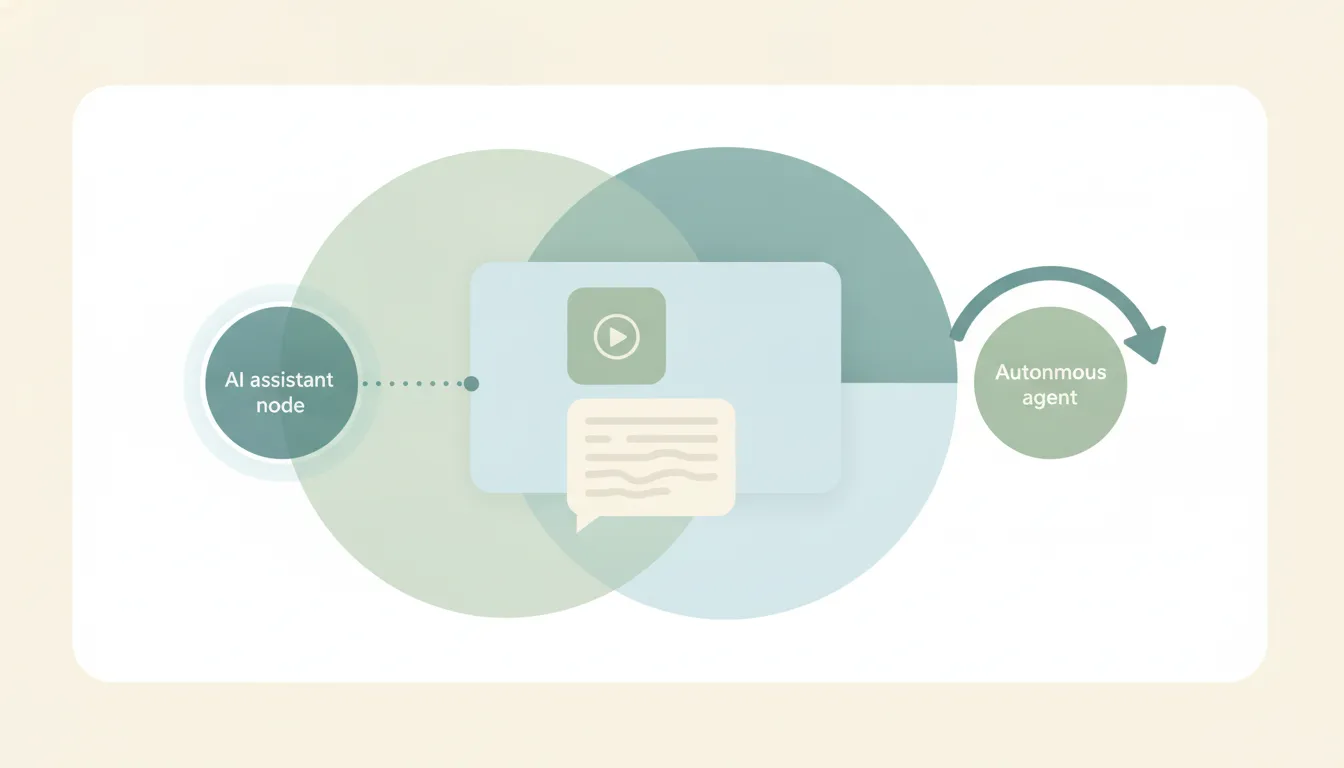
The thing worth knowing before you set it up: an MCP server hands your Zoom data to an AI inside a conversation you start. It’s a doorway, not a worker. Nothing watches your calendar for meetings ending, nothing fires when a recording finishes processing, and nothing runs while the chat is closed. Here’s exactly what the Zoom MCP does, how to turn it on, where it stops — and what to use when you want Zoom work that runs on its own.
For the wider picture, every app with an MCP server is listed by category.
What the Zoom MCP server does
Model Context Protocol (MCP) is the open standard that lets an AI client — Claude, ChatGPT, Cursor, VS Code, and others — talk to an outside app through a shared interface. Zoom’s own developer docs describe a serverless MCP server, hosted by Zoom over streamable HTTP, that bridges Zoom Workplace with AI tools.
With it connected, an AI client can:
- Pull meeting intelligence — summaries, transcripts, recordings, notes, and action items from past Zoom meetings, surfaced in plain language.
- Draft follow-ups from real context — an email or recap grounded in what was actually said on the call, not a guess.
- Search across connected systems — the May 2026 expansion added agentic search across Salesforce account records, Workday employee data, ServiceNow tickets, and more, so an AI can reason across a meeting and the enterprise data tied to it.
- Automate chat and scheduling tasks — send Zoom Chat messages, check calendar availability, flag scheduling conflicts, and pull Clips or Whiteboard content, depending on the scopes you grant.
It’s genuinely useful for ad-hoc work: ask what was decided on last Tuesday’s client call, and get an answer pulled from the actual transcript.
How to set up the Zoom MCP server
Unlike some vendors’ one-click connectors, Zoom’s MCP setup expects you to register an app first:
- Create a Zoom app in the Zoom App Marketplace, listed as an “integration point,” and define the OAuth scopes you want the AI to have (meetings, chat, recordings, etc.).
- Grab the Client ID and Client Secret Zoom issues for that app.
- In your AI client — say, Claude — go to Customize > Connectors > Add custom connector, and enter the remote MCP server URL plus your Client ID and Secret.
- Add the client’s OAuth redirect URL (for Claude,
https://claude.ai/api/mcp/auth_callback) back in your Zoom app’s settings so the authorization round-trip completes. - ChatGPT’s flow is similar but runs through Developer Mode and a user-defined OAuth client instead of a built-in connector picker.
Zoom’s FAQ confirms Claude, ChatGPT, Cursor, and VS Code all connect over the same SSE/HTTP transport once that OAuth handshake is in place. It’s more setup than flipping a toggle, but it’s genuinely official and documented on Zoom’s own site.
Where the Zoom MCP stops
None of this is a knock on MCP — it’s just the shape of the protocol. Four limits show up the moment you want more than a conversation:
- It only works inside a chat you start. Close the window and nothing happens. The AI doesn’t watch Zoom; it waits for you to ask.
- No triggers. A meeting ending, a recording finishing, a new Clip landing in your library — none of these can start anything through MCP. There’s no “when this happens in Zoom, do that.”
- It’s one app at a time. The Zoom MCP knows Zoom (and, via agentic search, a handful of connected enterprise systems). Getting a meeting recap into Slack, a CRM, and a project tracker in one motion means wiring up separate MCP servers for each and hoping your client can juggle them in a single turn.
- You own the app registration and the scopes. Creating the Zoom Marketplace app, managing the Client ID/Secret, and tracking what each connected AI client can read and write are all on you.
So the Zoom MCP is a great way to ask about a meeting and get a grounded answer. It is not a way to make Zoom run — to have work happen the moment a call ends or on a recurring schedule, across the other tools that meeting touches.
Running Zoom work that doesn’t need a chat open
That “run on its own, across apps” gap is exactly where Carly fits. Carly connects to Zoom natively — no Marketplace app to register, no Client ID/Secret to manage — and to the ~260 other apps it supports, plus anything with a public API through your own key. The difference from MCP is the important part: Carly’s workflows are triggered and scheduled, so Zoom work happens whether or not anyone has a chat window open.
A few things that MCP can’t do but a Carly workflow can:
- When a Zoom meeting ends → pull the transcript, draft action items, post the recap to the right Slack channel, and log it against the CRM contact — automatically.
- Every morning → summarize the recordings and transcripts from yesterday’s client calls and email the digest to the team.
- When a call is booked with a prospect → pull their CRM history, draft prep notes, and send them to the host before the meeting starts.
The non-AI steps — the moving, matching, and routing between apps — are free, the Zapier-style backbone of the workflow. The AI steps (drafting, summarizing, deciding) start at $35/month. You describe the outcome in plain language and Carly wires up the Zoom connection and everything downstream.
If you just want to ask questions about a past meeting from a chat, Zoom’s official MCP server is the right tool once it’s set up. If you want Zoom work to actually happen — on a trigger, on a schedule, across every app a meeting touches — that’s the job MCP wasn’t built for, and it’s the one Carly was.
FAQ
Does Zoom have an official MCP server?
Yes. Zoom hosts its own MCP server, documented at developers.zoom.us/docs/mcp, giving MCP-compatible AI tools access to meeting summaries, transcripts, recordings, chat, and — since a May 2026 expansion — agentic search across connected systems like Salesforce and Workday.
Is the Zoom MCP server free? Connecting to it doesn’t cost extra on top of your Zoom plan, but setup isn’t zero-config: you register an app in the Zoom App Marketplace and generate OAuth credentials before any AI client can connect.
Can the Zoom MCP trigger automations? No. MCP is request/response inside an AI chat — it has no triggers and nothing runs when the conversation is closed. For event- or schedule-driven Zoom work across apps, you need a workflow tool like Carly rather than an MCP server.
Can I connect Zoom to AI without coding or hosting a server? Yes. You don’t have to touch MCP, the Zoom Marketplace, or OAuth credentials at all. Carly connects to Zoom for you and lets you build the automation in plain language — describe what you want to happen and it wires up the Zoom connection and the other apps involved, with no server to host and no app registration to manage.
Ready to automate your busywork?
Carly schedules, researches, and briefs you—so you can focus on what matters.
See what people say
"Before Carly, I relied on a Calendly link, but the whole process felt impersonal and not very professional. Carly changed that by handling all the back-and-forth, so I'm no longer stuck in endless email threads trying to line up schedules.
Now Carly reaches out to candidates, shares my real-time availability, lets them pick a slot, then sends a Zoom link and drops it straight into my calendar. She sends reminders to both of us before each call, which has significantly reduced no-shows and last-minute confusion.
On top of scheduling, Carly acts like a full executive assistant, sending me my schedule the night before so I can prepare for each call. It reminds me of the old x.ai assistant, but Carly is noticeably smarter, faster, and better suited to my healthcare recruitment business."