Can Claude Have an Email Address? The Honest Answer (2026)
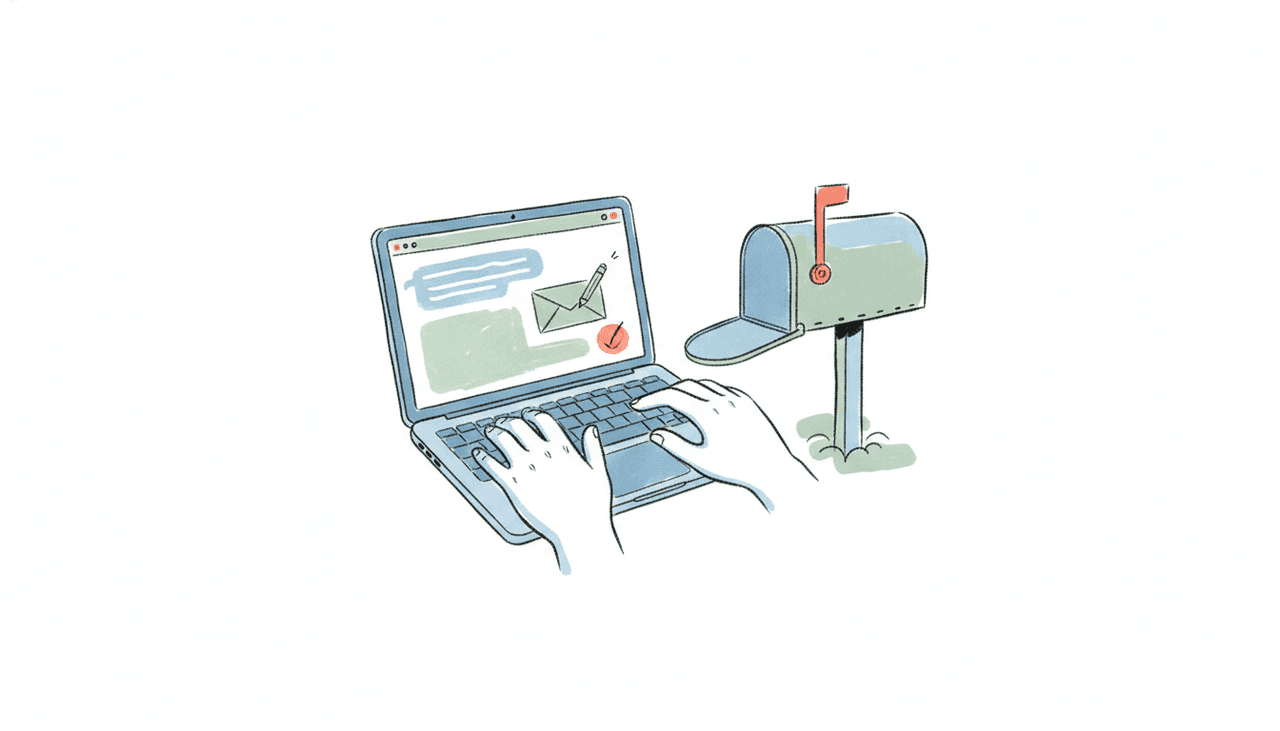
No — Claude does not have its own email address, and there’s no inbox you can email or CC to reach “your Claude.” You talk to Claude in a chat window, in Claude Code, or through an app that embeds it. There is no claude@anthropic.com-style mailbox that reads what you send and mails you back, and there’s no address a colleague can CC to loop your assistant into a thread.
That’s the short answer. The longer answer is more useful, because Claude can touch your email through connectors — just not in the “email it like a coworker” way people are usually asking about. Here’s exactly what Claude can and can’t do with email today, and what it actually takes to have an AI assistant with its own address.
Why people ask “can you email Claude?”
The question usually comes from one of two places. Either you want to forward Claude a message and have it act on it the way you’d hand something to an assistant, or you want to CC an AI on a thread so it drafts replies, schedules the call, and follows up without you babysitting a chat window.
Neither works with Claude, because Claude isn’t reachable by email. Anthropic ships Claude as a conversational assistant you prompt directly. It has no persistent mailbox, no address of its own, and no ability to receive mail that a person sends. Search for a “Claude email address” and you’ll find setup guides for connecting Claude to your Gmail — not an address that belongs to Claude.
What Claude can actually do with email
Through Anthropic’s official Google Workspace connector, Claude can reach your inbox once you authorize it. In that setup it can search your mail in plain language, summarize long threads, and write replies for you. That’s genuinely useful, and it’s worth understanding the boundary clearly.
The boundary is that Claude never sends unprompted. It can send, reply and forward through the Gmail connector, but it asks you to approve each message, so nothing leaves your account without you. Anthropic’s own Google Workspace connector documentation describes read and draft access, and the connector has no triggers, so Claude can’t react to incoming mail. We verified this in October 2026: Claude reads, drafts and sends with your approval, and a scheduled task can run it on a clock you set (paid plans), but nothing starts it because a message arrived. (For the full surface-by-surface breakdown across Gmail, Outlook, and Microsoft 365, see can Claude send emails.)
By contrast, ChatGPT’s Gmail connector can now send mail directly from chat, with your approval, on paid tiers. So “an AI that can send email” exists. But even ChatGPT sending through your Gmail account is a different thing from what this article is about.
Sending through your inbox is not the same as having its own address
This is the distinction that matters, and it’s easy to blur.
An assistant that sends email through your account is still acting as you. It borrows your address, mails from your name, and only when you ask or on a schedule you set. Nobody can reach it. Your teammates can’t CC it. It doesn’t exist as a participant on a thread.
An assistant with its own email address is a different model entirely. It has a mailbox. You email it, forward to it, or CC it like any coworker. It reads the context of the thread, does the work, and replies from inside email on any device — no chat window open, no you-in-the-loop required for each step. Other people on the thread can talk to it directly.
Claude is firmly in the first category, and every send waits on your approval. It has no address of its own for anyone to write to. If what you actually want is the second model, you need a different kind of product.
The other thing sometimes called “an email address for an AI”
There’s a wave of developer tooling, including our own CarlyEmail, that provisions an inbox for a software agent through an API. That’s real, but it’s infrastructure for engineers building applications, not an assistant a professional emails to get work done. You don’t forward those inboxes a message and get a finished task back; you write code against them. Worth knowing the category exists so you don’t confuse “inbox API for developers” with “an AI executive assistant you can email.”
An AI EA that does have its own email address
If you want to genuinely email an assistant and get finished work back, that’s what Carly is built for. Every Carly agent has its own dedicated email address out of the box. You email it, forward to it, or CC it on a thread, and it reads the context, does the work, and replies from inside email — on any device, no chat window required.
And because it has a real mailbox, it finishes the job rather than handing you a draft. Carly schedules across Google Calendar and Outlook / Microsoft 365, triages your inbox, chases follow-ups, and runs recurring briefs and multi-step workflows end to end. It connects to thousands of apps, including the ones you already use. If you’re comparing options in this space, our roundup of the best AI email agents and the guide to AI assistants you can actually email go deeper.
Pricing is straightforward: free Zapier-style workflows, with AI agents starting at $35/month.
It can run on your own domain
For teams, Carly agents can send from your domain instead of a Carly address, so mail comes from you@yourcompany.com, DKIM-signed and aligned to your brand. Setup is close to self-serve: the org portal walks you through a short checklist — add your domain, paste a handful of DNS records (one verification TXT plus three DKIM records, each with a copy button and an SPF row) into your registrar, point your addresses back to the agent, then hit “Verify & go live.” No support ticket, no AWS console. Nothing sends from your domain until verification confirms, so deliverability stays clean. It’s available on org plans and set up in the portal; for the current comparison of who else offers this, see which AI assistants can have their own email. A couple of other tools (CalendarBridge, for instance) offer custom-domain sending too, but Carly is the easiest place to get an agent with its own branded address.
FAQ
Can Claude have its own email address?
No. Claude has no dedicated inbox and no address of its own. You interact with it in a chat window or through embedded apps, and there is no mailbox a person can email or CC to reach it.
Can you email Claude?
No — Claude cannot receive email. It has no address to send to. Through the Gmail connector it can read, draft and send mail in your account after you authorize it, with your approval on each send, but you can’t send a message to Claude and have it respond.
Does Claude have an email address you can CC on a thread?
No. Because Claude has no mailbox, it can’t be added to an email thread, and teammates can’t CC it. Assistants that support this, like Carly, are given their own dedicated address for exactly this purpose.
Can Claude send emails for me?
Only with your approval. Claude’s Gmail connector can send, reply and forward, but it asks you to approve each message. A scheduled task can run Claude on a clock you set, but there are no triggers, so nothing happens when mail arrives. See can Claude send emails for the full picture.
What if I want an AI I can actually email like a coworker?
Use an AI executive assistant built for it. Carly gives every agent its own email address, so you email or CC it and it finishes the task end to end, and on team plans it can run on your own custom domain.
Ready to automate your busywork?
Carly schedules, researches, and briefs you—so you can focus on what matters.
See what people say
"Before Carly, I relied on a Calendly link, but the whole process felt impersonal and not very professional. Carly changed that by handling all the back-and-forth, so I'm no longer stuck in endless email threads trying to line up schedules.
Now Carly reaches out to candidates, shares my real-time availability, lets them pick a slot, then sends a Zoom link and drops it straight into my calendar. She sends reminders to both of us before each call, which has significantly reduced no-shows and last-minute confusion.
On top of scheduling, Carly acts like a full executive assistant, sending me my schedule the night before so I can prepare for each call. It reminds me of the old x.ai assistant, but Carly is noticeably smarter, faster, and better suited to my healthcare recruitment business."