White-Label AI Assistant for Agencies: Own Domain, Your Brand
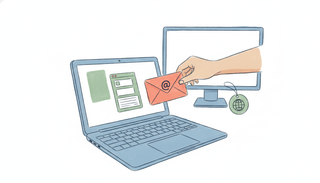
When an agency puts an AI assistant in front of a client, the branding on the email matters as much as the work inside it. A follow-up that lands from assistant@some-ai-vendor.com tells the client you outsourced their account to a tool. The same follow-up from taylor@youragency.com reads as your team doing what your team does. That gap is the whole reason agencies ask for a white-label AI assistant: one that works from your own domain, under your own name, so nobody on the client side ever sees the vendor behind it.
This guide covers why the own-domain requirement is non-negotiable for client-service firms, what a branded agent can actually do for scheduling, follow-up, and reporting, and how to stand one up without a support ticket or an engineering project.
Why a generic AI address breaks client trust
Agencies sell trust and polish. Clients are paying a premium precisely so they don’t have to think about the plumbing. The moment an email arrives from an unfamiliar third-party address, three things happen at once: the client wonders who this vendor is, whether their data is sitting inside it, and why the agency didn’t just handle it directly. None of that is fatal, but all of it is friction you created for free.
There’s a deliverability problem too. A message from a domain your client has never corresponded with, about their account, is exactly the profile spam filters flag. Booking confirmations land in Promotions. Reminders get quarantined. The client misses the meeting and blames you, not the filter.
A branded, own-domain agent removes both problems. The email is DKIM-signed and SPF-aligned to your domain, so it authenticates as genuinely coming from you. It threads into conversations the client already recognizes. And because the from-address is you@youragency.com, the client experience is indistinguishable from a human account manager typing the message. The AI does the work; your brand gets the credit.
What a branded own-domain agent actually does for client work
A white-label assistant is only worth the setup if it carries real weight across the account. The useful version isn’t a chatbot with a send button; it’s an agent with its own dedicated email address that you and your team email or CC like a coworker, and it finishes the job rather than handing you a draft. A few of the jobs that map cleanly onto agency work:
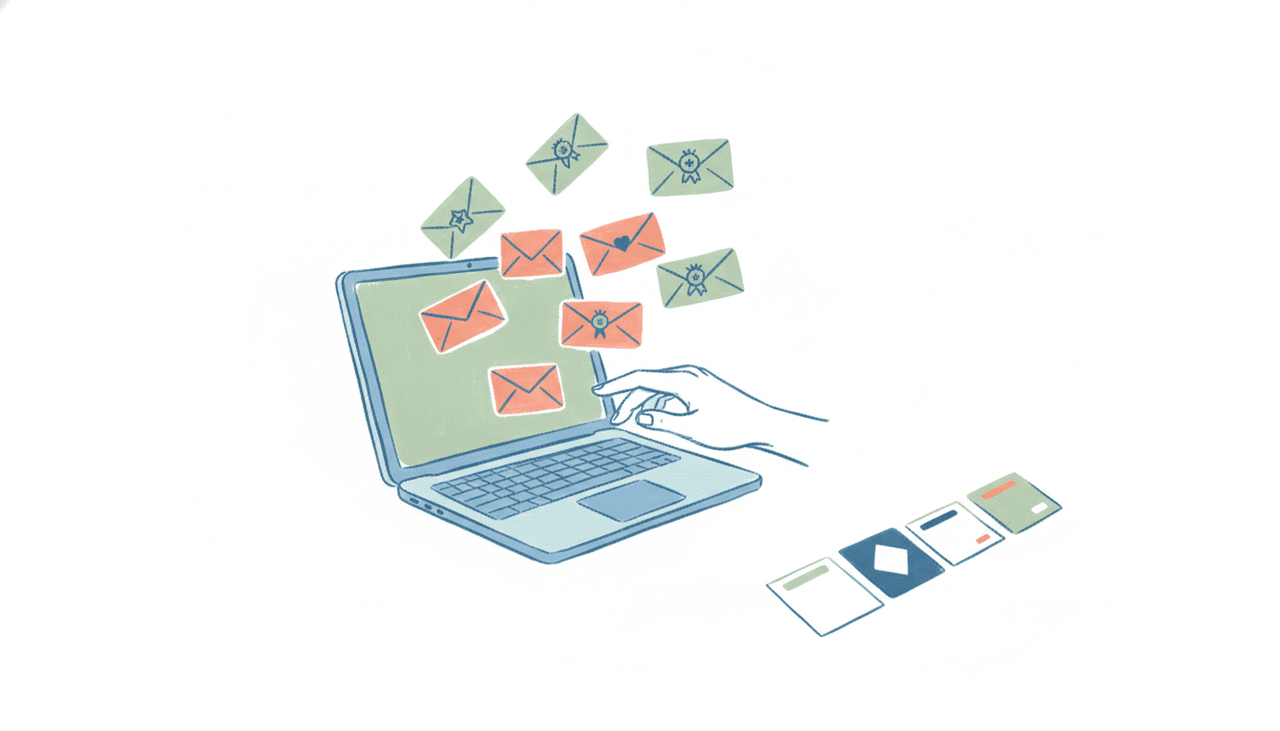
Client scheduling under your brand. CC the agent on a thread with a client and it proposes times, sends the invite, and handles the reschedule dance, all from your domain across Google Calendar or Outlook and Microsoft 365. The client books time with “your team,” never with an AI vendor. If you run several client calendars, each can sit behind its own branded address.
Follow-up that doesn’t slip. Post-call recaps, “here’s what we owe you by Friday” notes, nudges when a client hasn’t returned an asset. These are the tasks account managers drop when three fires are burning. An agent that owns the follow-up, and signs off as you, keeps accounts warm without adding a headcount.
Recurring reporting to clients. A Monday performance digest, a monthly summary pulled from the tools where the numbers live, a standing status email to a stakeholder who wants to feel informed. Because the agent reaches almost any app, native or through your own API key, it can assemble the report from your analytics, project, and CRM tools and send it on a schedule from your address.
For the account team’s internal view of how email-first agents fit into a stack, the walk-through in the AI assistant you can email and the roundup of the best AI email agents are good companions. If you’re deciding how much personality and identity to give each client-facing agent, giving an AI agent a name, email, and personality is worth a read before you name them.
Why the mainstream chatbots don’t fit this job
It’s a fair question why an agency can’t just point ChatGPT or Claude at a client account. The distinction is specific. As of mid-2026, ChatGPT can send email through the Gmail connector with your approval, and Claude sends from Gmail with your approval too (its Microsoft 365 write access exists but is gated behind an org admin enabling it). But “send an email on your behalf through a connector” is not the same as “the assistant has its own address that you, your team, and your clients email and CC.” A connector sends from your personal mailbox after you press a button. It has no standing identity a client can reply to, no branded from-address, and no way for a teammate to loop it into a thread. For a solo task that’s fine. For a client-facing account handled by a team, you want an addressable coworker, not a send button. The honest comparison is laid out in can ChatGPT send emails.
There’s also a separate wave of developer tooling that gives software agents their own inbox over an API. That’s infrastructure for engineers building products, not an assistant an account manager emails. If your agency isn’t shipping software, it’s the wrong layer.
Standing up your branded domain, step by step
The reason agencies assume this is a heavy lift is that “custom sending domain” usually means a support ticket, an AWS console, and a week of back-and-forth. With Carly it’s close to self-serve. You do it in your org portal, and the only real work is pasting a few DNS records into your registrar, whether that’s GoDaddy, Cloudflare, Google Domains, or anything else.
- Add your domain. Type it into the portal and hit Add domain. The portal immediately shows the exact records you need: one verification TXT record, three DKIM CNAME records, each with a one-click copy button, and an SPF row (with a Google Workspace variant and a warning not to create a second SPF record). Nothing to wait on.
- Paste the records at your host. Drop those DNS records into your registrar. This is the whole manual step.
- Wire up the addresses. Forward each address’s mailbox to Carly’s ingest address so client replies come back to the agent, then add your sending addresses and signatures. You can do this right away, before verification finishes.
- Verify and go live. Hit Verify and go live. It checks live and flips the domain to verified the moment DKIM propagates. Nothing sends from your domain until that check passes, so you’re never at risk of a half-configured agent emailing a client, and you’re never blocked waiting on a human.
The full DNS walk-through, including the SPF gotcha that trips up Google Workspace shops, lives in the custom email domain setup guide. Once the domain is verified, deliverability and the underlying mail infrastructure are handled for you; the branded from-address is the part clients see.
Some scheduling tools offer a custom-domain option too, so the category isn’t unique. What makes this practical for an agency is that spinning up a branded, own-domain agent is self-serve rather than a professional-services engagement.
What it costs and how agencies roll it out
Carly’s model is: free Zapier-style workflows, with AI agents starting at $35/month. The white-label custom-domain capability is an Enterprise/org feature, set up in the org portal rather than sold as a fixed add-on line item, so the right move is to talk through your client count and domain setup at carlyassistant.com rather than reading a number off a page.
Most agencies start with one client account, stand up a single branded address, and run scheduling and follow-up through it for a few weeks before rolling the pattern out across the book. Because each agent has its own address, you can give one client a dedicated agent on their own domain and another a shared agency address, without rebuilding anything.
FAQ
What is a white-label AI assistant for an agency?
It’s an AI assistant that emails your clients from your agency’s own domain and branding instead of a generic vendor address. Clients see messages from you@youragency.com, DKIM-signed and SPF-aligned to your brand, so the assistant reads as part of your team rather than an outside tool.
Can the AI assistant email clients from my own domain?
Yes. On an Enterprise/org plan you stand up your own sending domain in the org portal by adding a handful of DNS records (one TXT and three DKIM CNAMEs, plus an SPF row). Once verified, the agent sends from your address with your signature.
How is this different from ChatGPT or Claude sending email?
Those tools can send from your personal mailbox through a connector after you approve each message, but they don’t have their own standing email address that you, your team, and your clients can email and CC. A white-label agent is an addressable coworker on your domain, not a send button inside a chat window.
Do I need an engineer to set up the custom domain?
No. The setup is a four-step checklist the org portal walks you through, and the only manual work is pasting DNS records into your registrar. There’s no AWS console, no support ticket, and nothing sends until the domain verifies live.
Can each client have their own branded agent?
Yes. Because every agent has its own dedicated email address, you can give one client a dedicated agent on their own domain and run another under a shared agency address, without rebuilding the setup for each one.
Ready to automate your busywork?
Carly schedules, researches, and briefs you—so you can focus on what matters.
See what people say
"Before Carly, I relied on a Calendly link, but the whole process felt impersonal and not very professional. Carly changed that by handling all the back-and-forth, so I'm no longer stuck in endless email threads trying to line up schedules.
Now Carly reaches out to candidates, shares my real-time availability, lets them pick a slot, then sends a Zoom link and drops it straight into my calendar. She sends reminders to both of us before each call, which has significantly reduced no-shows and last-minute confusion.
On top of scheduling, Carly acts like a full executive assistant, sending me my schedule the night before so I can prepare for each call. It reminds me of the old x.ai assistant, but Carly is noticeably smarter, faster, and better suited to my healthcare recruitment business."