Claude for Expense Reports: It Reads Receipts, But Can't File Them (2026)
Partly — Claude reads receipts and builds the report, but it can’t gather or file it. Drop a stack of receipts into a chat and Claude will pull the merchant, date, amount, tax, and category from each one (even photos) and tabulate a clean expense report. What it can’t do is dig the receipts out of your inbox, collect them as they come in over the month, or submit the report into Concur, Expensify, or your finance system. There are no triggers, so it only helps when you hand it the files.
Here’s the honest, surface-by-surface reality of using Claude for expense reports, and what real automation requires.
What Claude does well: reading receipts and tabulating
For the reading and math parts, Claude is genuinely capable:
- Receipt extraction. Merchant, date, amount, currency, tax/VAT, and a suggested category — pulled accurately from PDFs and photos.
- Tabulating. Turn a pile of receipts into a tidy expense report: itemized rows, subtotals by category, and a grand total.
- Policy checks. “Flag anything over the $75 meal limit” or “which of these need a receipt attached?” is well within reach.
- Formatting. Output a CSV or a table that matches your expense template, plus a summary note for approval.
If your pain is reading receipts and adding them up, Claude does that fast. The gap is everything before and after.
Where it stops: it can’t collect or file
An expense report is a small process: receipts accumulate → get gathered → matched to card transactions → tabulated → submitted → reimbursed. Claude only helps with the “read and tabulate” middle, and only on files you paste. It won’t:
- Search your inbox for receipt emails and pull the attachments.
- Collect receipts continuously through the month as they arrive.
- Match receipts to your corporate-card statement.
- Submit the report into Concur, Expensify, or your finance tool.
- Route it for approval or file the receipts to a folder.
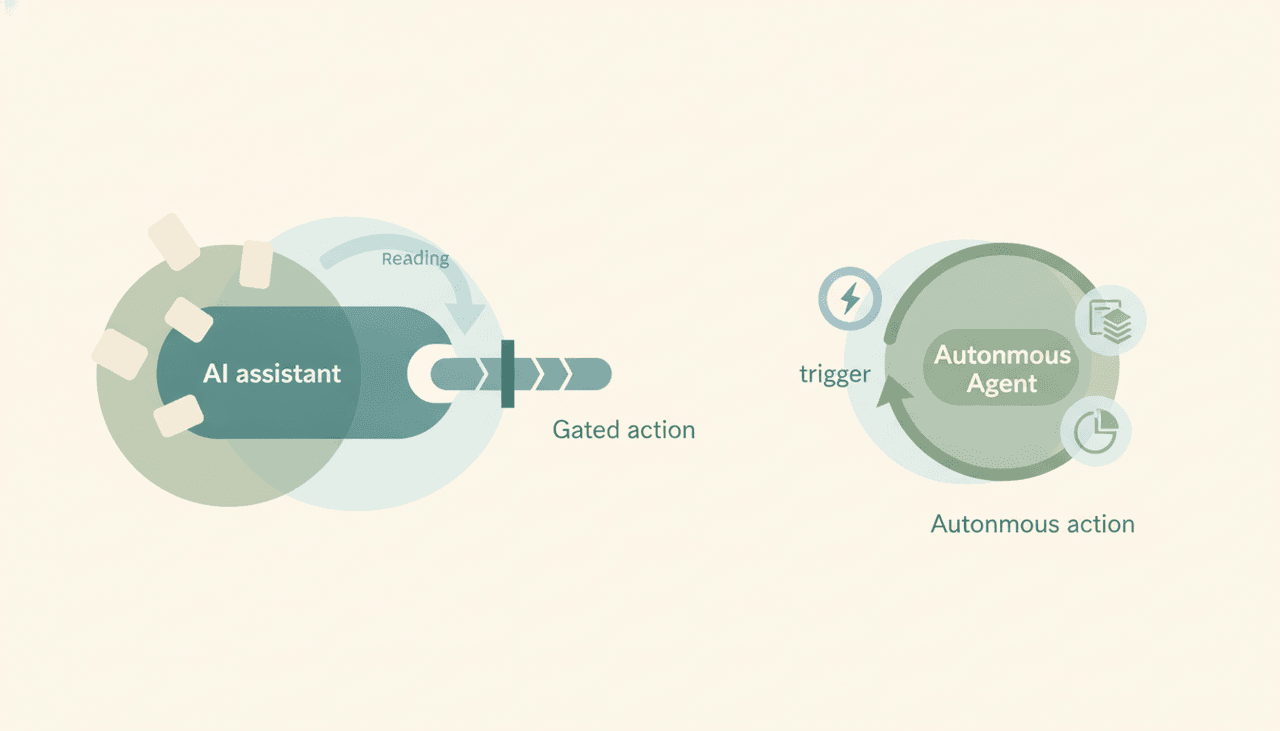
Expense-tool connections, where they exist, are usually custom or third-party MCP (often paid) and read-leaning — so Claude can’t submit a report on its own, and only ever acts inside a conversation you start.
The real ceiling: no triggers, so receipts pile up
Expenses happen continuously — a receipt emailed here, a card charge there — and the painful part is collecting them, not adding them up. Claude has no event triggers: its connectors only work inside a conversation you start. There’s no “when a receipt email arrives, save it and add it to this month’s report” and no “on the last day of the month, compile and submit.”
Claude Cowork’s scheduled tasks run on a fixed clock and only while your computer is awake with the desktop app open — not always-on, not event-driven. So even a monthly “compile expenses” routine can’t reliably run without you there to start it. The grind of expense reports is the gathering, and that’s exactly what Claude can’t do.
Claude vs. real expense automation
| Read receipts & tabulate | Collect receipts from inbox | File/submit the report | On triggers / automatic | Runs 24/7 | |
|---|---|---|---|---|---|
| Claude (chat) | Yes | No | No | No | No |
| Claude Cowork | Yes | Limited | No | Fixed clock, laptop awake | No |
| Generic AI chatbot | Yes | No | No | No | No |
| Carly | Yes | Yes | Yes | Yes | Yes |
Same pattern as Can Claude send emails?: Claude builds the report, but it can’t gather the inputs or submit the result, and nothing fires automatically.
What actually doing expense reports looks like
If the job is “expenses get collected and filed,” not “help me total this stack,” you need an agent built to act. That’s Carly, an AI executive assistant that lives in your inbox and tools:
- It collects receipts on triggers. When a receipt email arrives, Carly saves the attachment, extracts the fields, and adds it to the running report — automatically, with your laptop off, all month long.
- It compiles and files. At month-end (or on demand), Carly tabulates the report, matches receipts to card charges, and submits it into your expense tool, with the PDFs filed to a folder.
- It chases what’s missing. Flag charges without receipts and follow up so the report is complete before it’s submitted.
- It connects to the rest of finance. Tie expenses into your books and approvals — see Claude for bookkeeping and Claude for data entry for what the chat-only versions can’t do.
- It builds the workflow for you. Tell it “I’d like to set up an expense-report system” in plain English; it interviews you, then builds it with you. No prompt engineering.
AI agents start at $35/month, and steps in a workflow that don’t use AI run free and unlimited. It connects to 200+ tools across 40+ categories — see integrations.
For the head-to-head, see Claude vs Carly.
Frequently Asked Questions
Can Claude read receipts and create an expense report?
Yes. Paste your receipts (PDFs or photos) into a chat and Claude will extract the merchant, date, amount, tax, and category, then tabulate a clean, itemized report. The limit is that you have to hand it every receipt; it can’t fetch them from your inbox itself.
Can Claude collect receipts from my inbox automatically?
No. Claude has no event triggers, so it can’t watch your inbox and pull receipt attachments as they arrive. You’d gather them yourself and paste them in. For automatic, all-month collection you need an agent like Carly.
Can Claude submit my report to Concur or Expensify?
Not on its own. Expense-tool connections are usually custom or third-party MCP (often paid) and read-leaning, so Claude can’t file a report autonomously. It can format the data for you to upload. Carly can compile and submit on triggers.
Is Claude accurate at reading receipts?
It’s strong, including on phone photos and faded thermal receipts, and it can flag policy violations like over-limit meals or missing receipts. As always, spot-check the totals before submitting — but the reading itself is reliable. The real gap is collecting and filing, not accuracy.
What’s the best way to automate expense reports end to end?
Use an agent that collects receipts from your inbox on arrival, tabulates them, matches card charges, and submits the report — without you in the loop. That’s Carly; AI agents start at $35/month.
More: Claude for bookkeeping · Claude for data entry · Claude for invoice processing · Can Claude send emails? · Claude vs Carly · Integrations
Ready to automate your busywork?
Carly schedules, researches, and briefs you—so you can focus on what matters.
See what people say
"Before Carly, I relied on a Calendly link, but the whole process felt impersonal and not very professional. Carly changed that by handling all the back-and-forth, so I'm no longer stuck in endless email threads trying to line up schedules.
Now Carly reaches out to candidates, shares my real-time availability, lets them pick a slot, then sends a Zoom link and drops it straight into my calendar. She sends reminders to both of us before each call, which has significantly reduced no-shows and last-minute confusion.
On top of scheduling, Carly acts like a full executive assistant, sending me my schedule the night before so I can prepare for each call. It reminds me of the old x.ai assistant, but Carly is noticeably smarter, faster, and better suited to my healthcare recruitment business."