Missive vs Front: Which Shared Inbox in 2026?
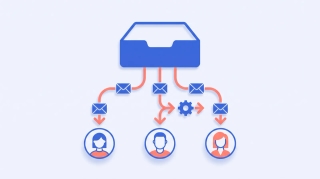
Both of these are shared team inboxes, but they aim at different-sized problems. Missive is a lighter collaborative inbox that pulls email, SMS, WhatsApp, and social into one place with in-thread team chat and real-time collaborative drafting, priced for small teams. Front is a heavier customer-operations platform built for support and ops orgs that need SLA rules, omnichannel routing, deep analytics, and AI resolution tooling. The one distinction that decides it: Missive is a team email tool, and Front is a customer-service system that happens to include a shared inbox. Name whether you’re sharing everyday team mail or running a support desk, and the choice gets simple. If neither is quite right, our Missive alternatives and Front alternatives roundups cover the rest of the field.
The One-Sentence Answer
Use Missive if you want an affordable, well-designed shared inbox for a small team’s general email; use Front if you’re running a customer support or operations org that needs SLAs, analytics, and AI resolution at scale.
Side-by-Side Comparison
| Dimension | Missive | Front |
|---|---|---|
| What it is | Collaborative team inbox + in-thread chat | Omnichannel customer-ops platform |
| Core job | Share and reply to team email/SMS/social | Run a support/ops desk with routing and SLAs |
| Entry pricing (2026) | From $14/seat/mo (Starter, up to 5 users) | From $25/seat/mo (Starter, up to 10 seats, single channel) |
| Mid tier | Productive $24/seat/mo (automations, API) | Professional $65/seat/mo (omnichannel, analytics) |
| Top tier | Business $36/seat/mo (SSO, advanced analytics) | Enterprise $105/seat/mo (bundled AI tools) |
| Channels | Email, SMS, WhatsApp, Messenger, Instagram | Email, SMS, social, WhatsApp, chat (omnichannel on higher tiers) |
| AI features | Drafting, summaries, translation, rules; multi-provider (Anthropic/OpenAI/Gemini) via credits or BYO key | Copilot (drafting/summaries, add-on), Autopilot (usage-based deflection agent), Smart QA/CSAT |
| Standout feature | Real-time collaborative drafting + chat beside the thread | SLA management, reporting, and customer-facing AI resolution |
| Best fit | Small teams, agencies, founders sharing a queue | Support and operations teams at scale |
Pricing above reflects annual billing; monthly billing runs higher on both. Verify current numbers on each vendor’s pricing page before committing.
When to Use Missive
- You’re a small team, agency, or two-to-ten-person company sharing one queue.
- You want internal chat to live right beside the email thread, not splinter off into Slack.
- Collaborative drafting matters — two people editing the same reply with live cursors.
- You care about per-seat cost and want to start near $14/seat rather than $25+.
- Your channels are general (email, SMS, social) rather than a formal support desk.
Missive is the lighter, more affordable option, and it’s genuinely well-designed for teams that just need to work email together without support-desk machinery.
When to Use Front
- You run a dedicated customer support or operations team.
- You need SLA rules, escalation, macros, and deep analytics on volume and response times.
- Omnichannel routing across email, chat, SMS, and social is core to the job.
- You want AI resolution tooling — Copilot for agents, Autopilot to deflect routine tickets.
- You’re at a scale where per-seat cost matters less than reporting and controls.
Front is the upmarket, customer-ops-oriented platform. It costs more and carries more machinery, and that’s the point for a support org that’s outgrown a plain shared inbox.
The Job Each One Is Actually Built For
The pricing gap tells the story. Missive tops out around $36/seat with unlimited users; Front’s popular Professional tier starts at $65/seat and Enterprise reaches $105. You’re not paying double for the same thing — you’re paying for a different category. Front is a customer-operations platform with SLA management, QA scoring, CSAT surveys, and a customer-facing deflection agent. Missive is a shared inbox with excellent collaboration built in. A five-person agency sharing client email is overpaying and over-tooled on Front; a fifty-agent support desk will hit the ceiling on Missive’s analytics.
There’s a limit both share, though: they route and organize the queue, but a person still writes and sends every reply. If you’d rather delegate the outcome than staff the queue, an autonomous AI assistant like Carly is a different category — its agents reply, schedule, and follow up on their own across Gmail or Outlook.
Quick Reference
| Your situation | Pick |
|---|---|
| Small team sharing general email, tight budget | Missive |
| Want chat and collaborative drafting beside the thread | Missive |
| Running a formal customer support desk | Front |
| Need SLAs, analytics, and omnichannel routing at scale | Front |
| Want AI to deflect routine tickets customer-side | Front (Autopilot) |
FAQ
Is Front just a bigger version of Missive? Not exactly. They overlap on the shared-inbox basics, but Front is built as a customer-operations platform — SLA rules, QA scoring, CSAT, deflection AI — while Missive is a collaborative team inbox. Front is the upmarket sibling in feature depth and price, but a support org needs things Missive doesn’t focus on, and a small team needs things Front makes you pay for.
Which is cheaper? Missive, clearly, at the entry and mid tiers. Missive starts near $14/seat and tops out around $36/seat with unlimited users; Front starts at $25/seat for a single channel and its omnichannel tiers run $65–$105/seat. For a small team the cost difference is large.
Do both handle SMS and social, not just email? Yes. Missive supports email, SMS, WhatsApp, Messenger, and Instagram across its plans. Front supports email, SMS, social, WhatsApp, and chat, though full omnichannel unlocks on its Professional tier and above.
Does either one reply to messages automatically? Not on their own — both help a team divide and answer a queue, but a person writes and sends each reply. Front’s Autopilot can deflect routine customer tickets, but that’s a support-deflection agent, not a general inbox assistant. If you want messages handled autonomously rather than routed, that’s a different category of tool.
Related: Missive alternatives · Front alternatives · Best email management tools · Best AI inbox management tools
Ready to automate your busywork?
Carly schedules, researches, and briefs you—so you can focus on what matters.
See what people say
"Before Carly, I relied on a Calendly link, but the whole process felt impersonal and not very professional. Carly changed that by handling all the back-and-forth, so I'm no longer stuck in endless email threads trying to line up schedules.
Now Carly reaches out to candidates, shares my real-time availability, lets them pick a slot, then sends a Zoom link and drops it straight into my calendar. She sends reminders to both of us before each call, which has significantly reduced no-shows and last-minute confusion.
On top of scheduling, Carly acts like a full executive assistant, sending me my schedule the night before so I can prepare for each call. It reminds me of the old x.ai assistant, but Carly is noticeably smarter, faster, and better suited to my healthcare recruitment business."