Attio vs Salesforce: Which CRM to Pick in 2026?
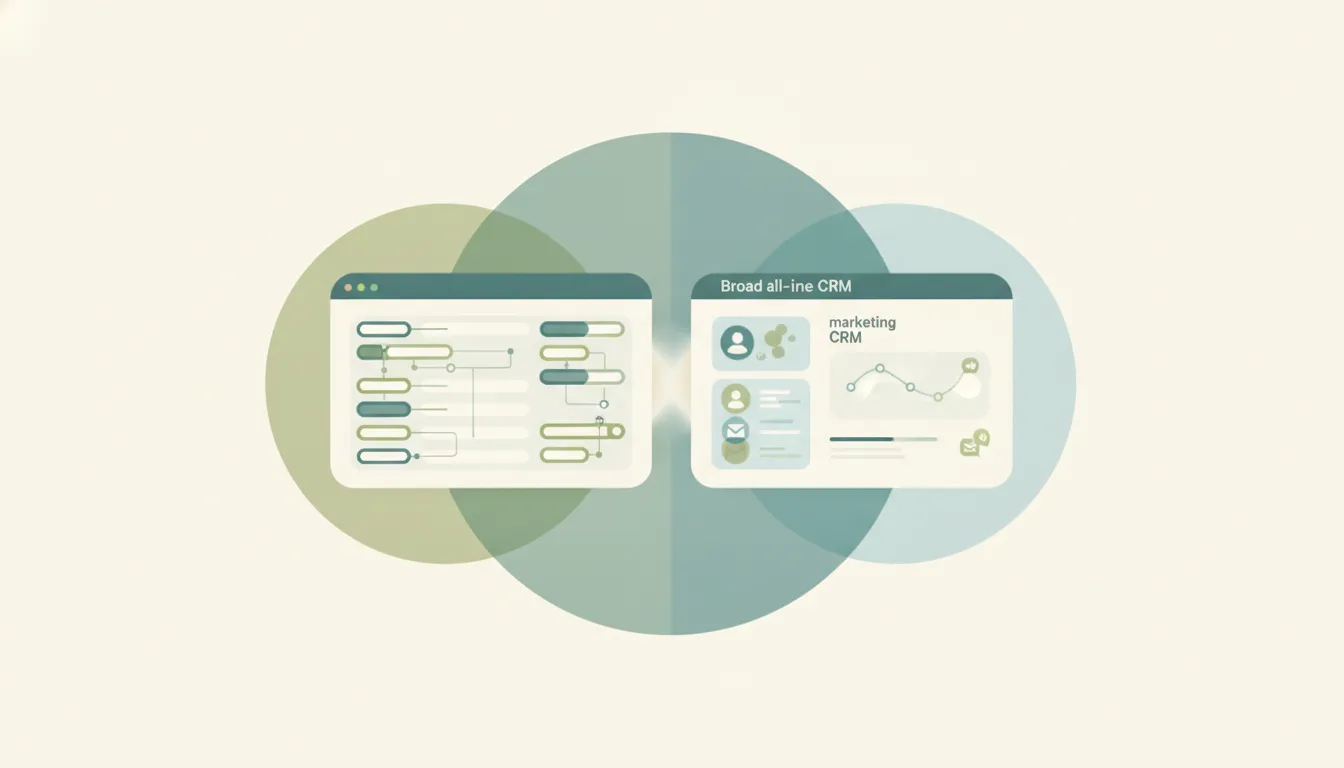
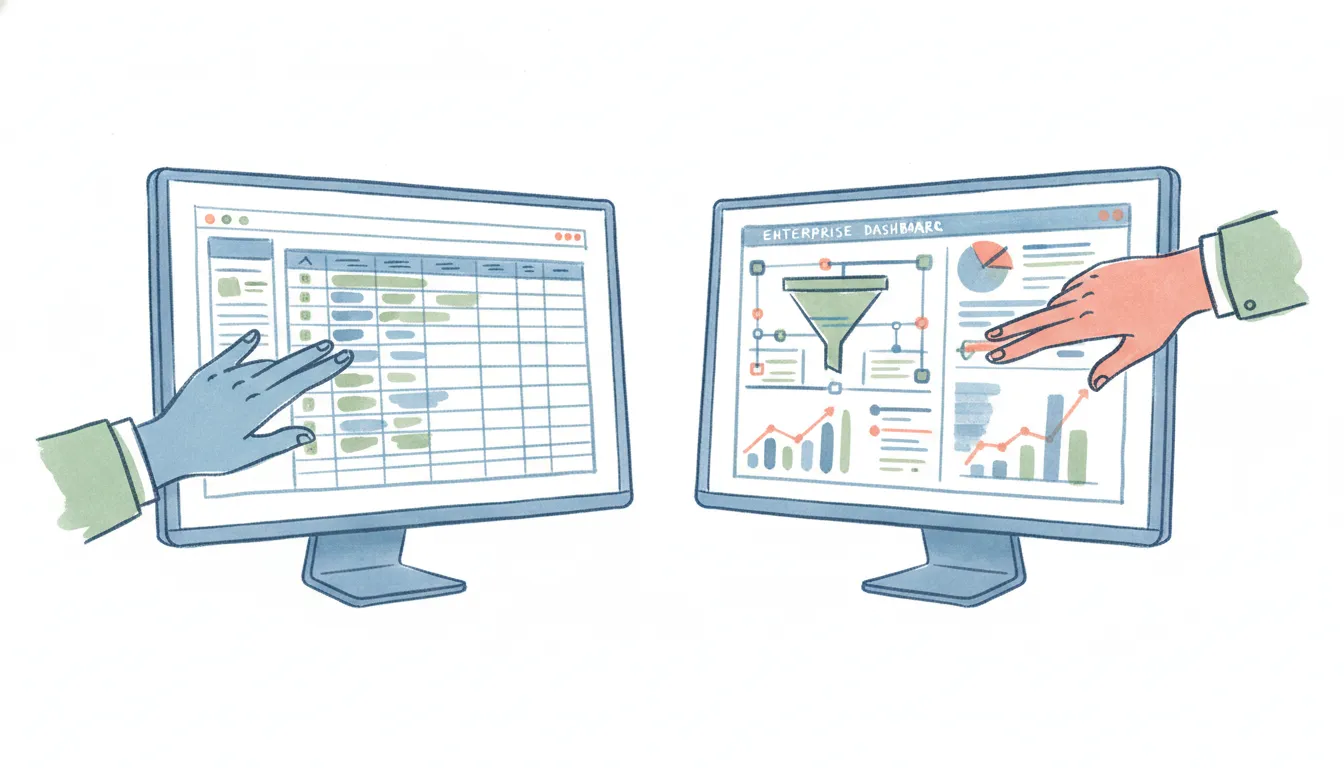
Both run your pipeline, but they are built for opposite ends of the market. Attio is a modern, AI-native CRM built around a moldable data model — Objects, Records, and Attributes you shape like a spreadsheet-database hybrid, with a fast Notion-like interface and AI woven into the records themselves. Salesforce is the enterprise standard — nearly unlimited customization, the largest app ecosystem in software, and the governance big organizations need, at the cost of complexity, implementation time, and price. Comparing Attio vs Salesforce mostly comes down to one question: how much CRM machinery do you actually need? If you mainly want a fast, flexible CRM a lean team can run itself → Attio. If you need deep customization, governance, and enterprise-scale reporting → Salesforce.
The One-Sentence Answer
Pick Attio if you want a fast, moldable, AI-native CRM your team can stand up in a day; pick Salesforce if you need the deepest customization, governance, and ecosystem for complex or enterprise-scale go-to-market.
Side-by-Side Comparison
| Attio | Salesforce | |
|---|---|---|
| Core strength | Moldable, AI-native data model | Deep customization & governance |
| How it works | Objects, Records, and Attributes you shape yourself | Configurable platform, usually admin- or partner-led |
| Best known for | Fast setup, clean records, startup default | Enterprise CRM, AppExchange, reporting depth |
| Pricing model | Free (3 seats) then $29–$69/seat/mo, plus usage credits | $25–$350/user/mo by edition; Agentforce 1 Sales $550 |
| AI approach | AI attributes + Ask Attio research agent built into records | Agentforce agents billed per action via Flex Credits |
| Integrations/ecosystem | Native syncs, API, and MCP connections | AppExchange, thousands of apps, largest ecosystem |
| Ideal user | Startups, agencies, lean revenue teams | Mid-market and enterprise sales orgs |
| Setup style | Live in hours, self-serve | Weeks to months, often a paid admin or partner |
When to Use Attio
- You want to be productive this week without hiring or renting a CRM admin.
- You value a flexible data model — custom objects and relationships that match exactly how your team sells.
- You want AI inside the CRM: AI attributes that classify ICP fit or research a company from its website, plus the Ask Attio agent for plain-language work.
- You’re a startup, agency, or modern revenue team that wants predictable per-seat pricing and a clean interface.
When to Use Salesforce
- You’re mid-market or enterprise with complex, regulated, or multi-team processes.
- You need the deepest reporting, forecasting, and territory management, plus fine-grained governance and permissions.
- You want the largest integration ecosystem — the AppExchange has an app for nearly everything.
- You have budget and staff for implementation and ongoing administration, and you’ll grow into products beyond CRM.
What Attio vs Salesforce Really Comes Down To: Total Cost of Ownership
Sticker price is the smaller part of this decision. Attio is free for up to 3 seats (50,000 records, 3 custom objects), then Plus at $29/seat/mo and Pro at $69/seat/mo on annual billing, with a hybrid model that layers usage credits on top (a shared workspace wallet runs about $150/mo for 10,000 credits). Crucially, most teams are live in hours and administer it themselves.
Salesforce’s Sales Cloud editions run $25/user/mo (Starter), $100 (Pro), $175 (Enterprise, where most sales orgs land), and $350 (Unlimited), after a roughly 6% increase in August 2025. But the license is only the beginning: enterprise rollouts commonly take weeks to months and frequently need a paid admin or implementation partner, so the real first-year cost often dwarfs the seat fee. AI adds another axis — Salesforce’s Agentforce charges per action via Flex Credits (a standard action is 20 credits, about $0.10, purchased at $500 per 100,000), and the fully bundled Agentforce 1 Sales edition is $550/user/mo. That per-action model is powerful at scale but harder to forecast than Attio’s flat seats plus a credit wallet. It’s also why Salesforce keeps expanding its AI footprint — in June 2026 it signed a $3.6B agreement to acquire Fin (formerly Intercom), whose per-resolution support agents slot into the same outcome-priced playbook.
Rule of thumb: if a lean team needs to sell this month, Attio’s speed and self-serve setup win; if you have complex processes, compliance needs, and the staff to run a platform, Salesforce’s depth pays off.
Carly is an AI executive assistant that plugs into whichever CRM you land on — native integrations for Attio and Salesforce — so it can log meetings, update records, and follow up over email or text without you living in either tool. Carly starts at $35/month.
Quick Reference
| Your situation | Pick |
|---|---|
| Startup or lean revenue team, no CRM admin | Attio |
| Need to be selling within the week | Attio |
| Complex, regulated, or multi-team processes | Salesforce |
| Deepest reporting, forecasting, governance | Salesforce |
| Want AI built into the records themselves | Attio |
| Enterprise scale with budget for implementation | Salesforce |
Related guides: Attio vs HubSpot · HubSpot vs Salesforce · Salesforce alternatives
Ready to automate your busywork?
Carly schedules, researches, and briefs you—so you can focus on what matters.
See what people say
"Before Carly, I relied on a Calendly link, but the whole process felt impersonal and not very professional. Carly changed that by handling all the back-and-forth, so I'm no longer stuck in endless email threads trying to line up schedules.
Now Carly reaches out to candidates, shares my real-time availability, lets them pick a slot, then sends a Zoom link and drops it straight into my calendar. She sends reminders to both of us before each call, which has significantly reduced no-shows and last-minute confusion.
On top of scheduling, Carly acts like a full executive assistant, sending me my schedule the night before so I can prepare for each call. It reminds me of the old x.ai assistant, but Carly is noticeably smarter, faster, and better suited to my healthcare recruitment business."