Pipedrive vs Salesforce: Which CRM to Pick in 2026?
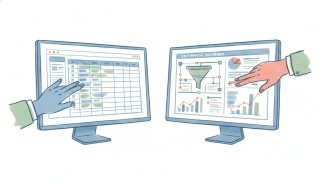
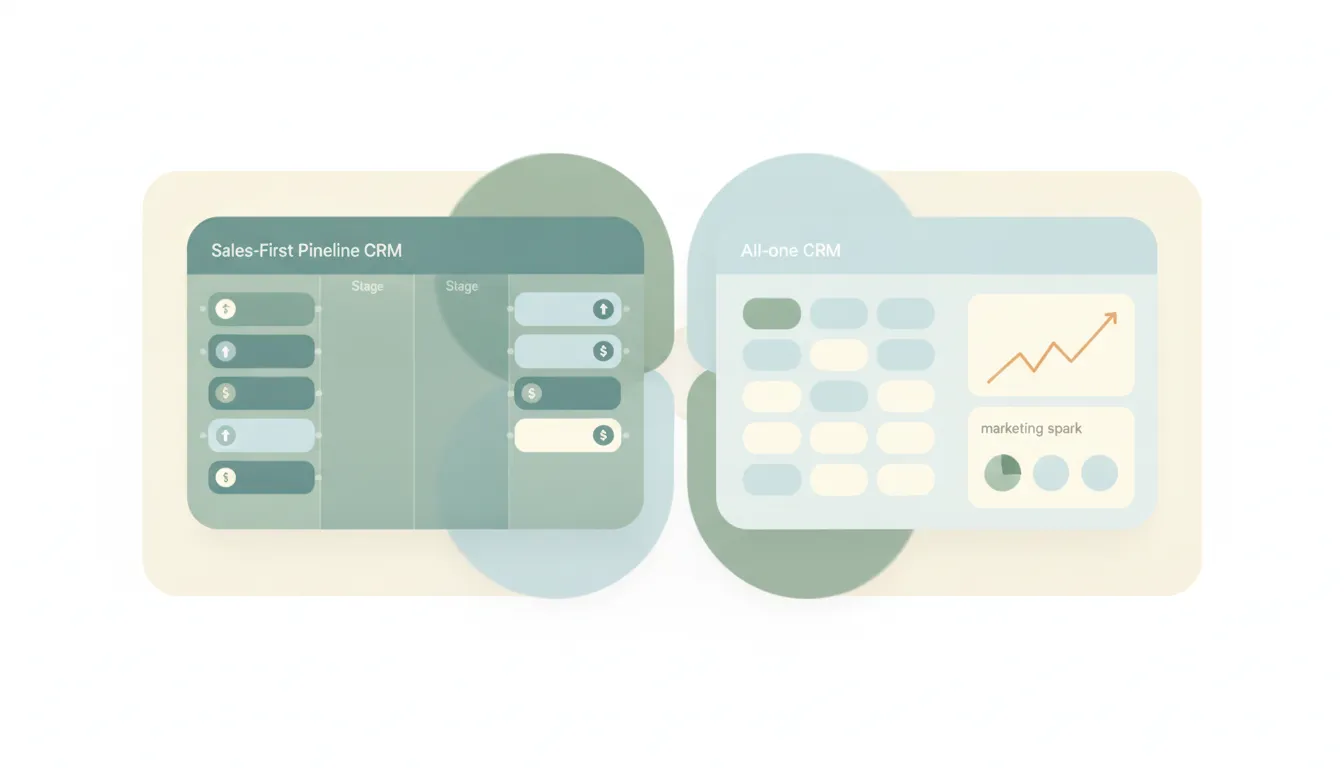
Both tools run your sales pipeline, but they are built for opposite ends of the market. Pipedrive is a simple, sales-team-first CRM built around a visual drag-and-drop pipeline, cheap seats, and a setup you can finish in weeks without hiring anyone. Salesforce is an enterprise CRM platform spanning Sales, Service, and Marketing clouds, with near-unlimited customization, the vast AppExchange, and Agentforce AI, at a price and complexity that usually demand a dedicated admin. If you mainly want a pipeline your reps actually use, pick Pipedrive. If you mainly want a customizable platform to model complex processes at scale, pick Salesforce.
The One-Sentence Answer
Use Pipedrive if you want an affordable, easy-to-adopt sales CRM your team runs itself. Use Salesforce if you need enterprise-grade customization, multiple clouds, and can staff an admin to run it.
Side-by-Side Comparison
| Pipedrive | Salesforce | |
|---|---|---|
| Core strength | Simple visual sales pipeline | Customizable enterprise platform |
| How it works | Drag-and-drop deals through stages | Configurable objects, flows, and clouds |
| Best known for | Ease of use and fast adoption | Depth, AppExchange, and Agentforce |
| Pricing model | ~$14 to $79 per user/month | ~$25 to $550 per user/month |
| Integrations/ecosystem | ~500+ marketplace apps | Vast AppExchange (thousands of apps) |
| Ideal user | SMB sales teams (roughly 5-200) | Mid-market to enterprise, 100+ seats |
| Setup style | Self-serve, live in weeks | Admin/consultant-led, months to deploy |
| AI | AI Sales Assistant (credit-metered) | Einstein + Agentforce autonomous agents |
When to Use Pipedrive
- You want a visual pipeline your reps can pick up in a day, not a platform that needs training
- You are a sales team of roughly 5 to 200 people without a dedicated CRM admin
- Budget matters and you want predictable, low per-seat cost
- Your process is straightforward B2B selling, not a multi-division, multi-cloud operation
When to Use Salesforce
- You need deep customization: custom objects, complex automation, and granular permissions
- You want one platform spanning sales, service, and marketing with a huge app ecosystem
- You have (or will hire) a RevOps team or admin to configure and maintain it
- You are scaling past ~100 seats with complex reporting, compliance, or territory needs
The Real Deciding Axis: Who Runs the CRM
The honest split is not features, it is operational overhead. Pipedrive is designed so a sales manager can configure the pipeline, invite the team, and be selling within weeks. Plans run roughly from a Lite tier around $14 per user/month up to Ultimate near $79, with AI features and richer automation arriving on the Premium and higher tiers. Its AI Sales Assistant surfaces win-probability predictions, flags stalled deals, and recommends next actions, though the heavier AI tasks (email drafting, summarization) consume credits. It is a helpful assistant layer, not an agent that does the work for you.
Salesforce is a platform, and platforms need operators. Sales Cloud spans five tiers in 2026, from Starter at about $25 per user/month up through Pro Suite ($100), Enterprise ($175, where most growing teams land), Unlimited ($350), and the top Agentforce 1 Sales bundle near $550. What you buy at those tiers is genuine power: custom objects, low-code flows, the AppExchange, Einstein predictive scoring, and Agentforce agents that can take autonomous actions across your data. For a complex org that is a bargain; for a lean sales team it is weight you will not use.
The gotcha with Salesforce is that the seat price is only part of the total cost. Enterprise deployments commonly run three to twelve months, most teams budget for a certified admin (a full-time hire, or consultants that bill $150 to $300 an hour), and extras like additional data storage and premium support add up. Run the math on a 20-person team and the license gap alone is stark: Pipedrive on a mid-tier plan lands around $1,000 to $1,200 a month, while Salesforce Enterprise runs north of $3,000 a month before a single hour of admin time. That difference is the price of customization. Pay it when your process genuinely needs custom objects, multi-cloud data, and territory-level reporting; skip it when a fixed, visual pipeline covers how your team actually sells.
Rule of thumb: If nobody on your team wants to (or can) administer a CRM, choose Pipedrive. If you have a RevOps function and processes too complex for a fixed pipeline, choose Salesforce.
Whichever CRM you land on, the actual scheduling, follow-up email, and admin around each deal still lands on a person. Carly is an AI executive assistant you email or text that integrates with both Salesforce and Pipedrive to book the meetings, send follow-ups, and keep records updated, so the CRM stays current without you living in it.
Quick Reference
| Your situation | Pick |
|---|---|
| Small B2B sales team, no admin | Pipedrive |
| Want reps selling within weeks | Pipedrive |
| Tight, predictable per-seat budget | Pipedrive |
| Enterprise scale, 100+ seats | Salesforce |
| Need custom objects and complex automation | Salesforce |
| Want autonomous AI agents (Agentforce) | Salesforce |
Related guides: Pipedrive alternatives · Salesforce vs HubSpot · Best AI CRM tools
Ready to automate your busywork?
Carly schedules, researches, and briefs you—so you can focus on what matters.
See what people say
"Before Carly, I relied on a Calendly link, but the whole process felt impersonal and not very professional. Carly changed that by handling all the back-and-forth, so I'm no longer stuck in endless email threads trying to line up schedules.
Now Carly reaches out to candidates, shares my real-time availability, lets them pick a slot, then sends a Zoom link and drops it straight into my calendar. She sends reminders to both of us before each call, which has significantly reduced no-shows and last-minute confusion.
On top of scheduling, Carly acts like a full executive assistant, sending me my schedule the night before so I can prepare for each call. It reminds me of the old x.ai assistant, but Carly is noticeably smarter, faster, and better suited to my healthcare recruitment business."