Inbox Zero vs Cora: Which AI Email Tool to Pick in 2026?
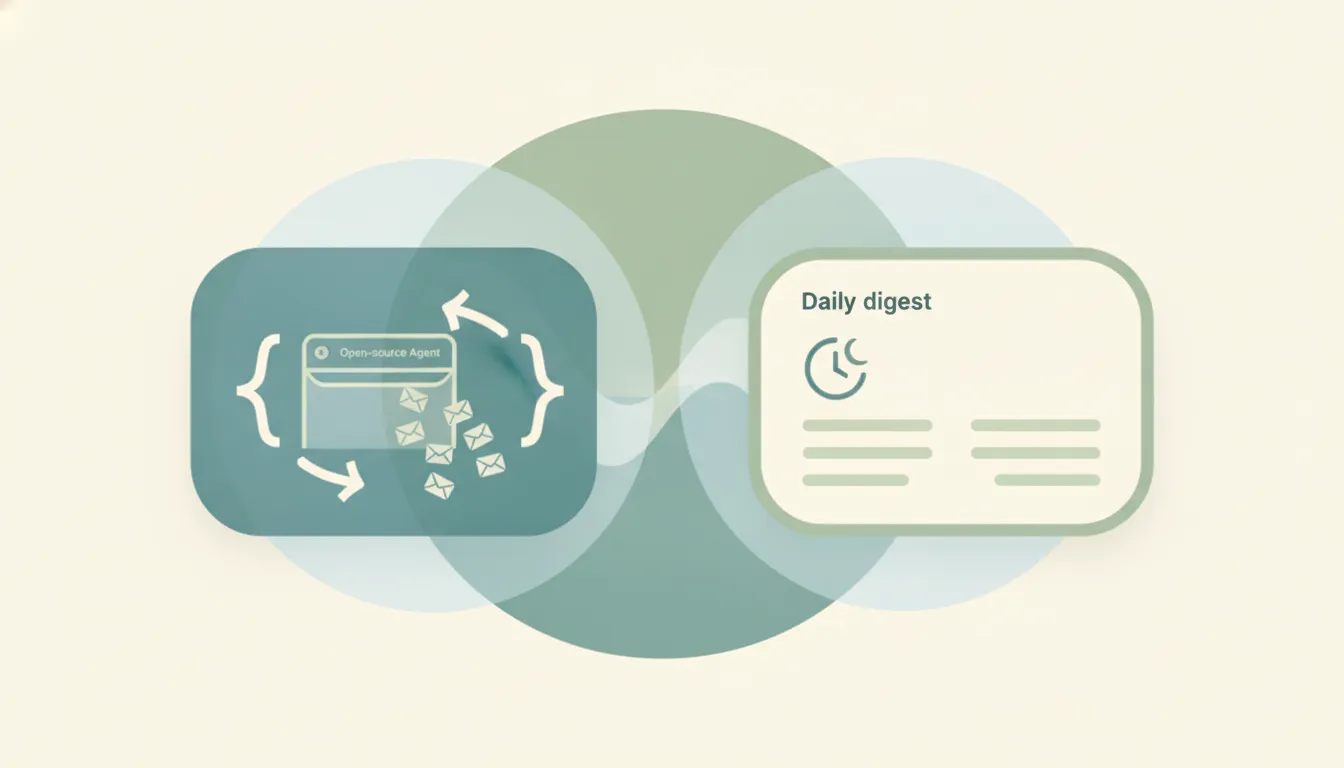
Both tools point AI at your email, but they aim in opposite directions. Inbox Zero is an open-source, self-hostable AI agent that sits on top of your existing inbox, works on Gmail and Outlook, and lets you write the rules for how mail gets labeled, archived, and replied to. Cora, built by Every, is a closed AI assistant that screens your inbox, drafts replies, and delivers a brief twice a day so you spend less time in email. If you want to own and tune the machinery, Inbox Zero. If you want the machinery to run itself and just hand you a digest, Cora.
The One-Sentence Answer
Pick Inbox Zero if you want open-source, self-hostable control over your inbox on Gmail or Outlook. Pick Cora if you want a hands-off Gmail assistant that screens mail and sends you a twice-daily brief.
Side-by-Side Comparison
| Inbox Zero | Cora | |
|---|---|---|
| Core approach | Open-source AI agent overlay | Closed AI screening + digest |
| Source model | Open-source, self-hostable | Proprietary, hosted only |
| Email support | Gmail and Outlook | Gmail only |
| Main promise | Automate and control your inbox | Get you out of the inbox |
| Signature feature | Custom AI rules and cleaner | Twice-daily brief of what matters |
| Pricing | ~$20/mo hosted, or free self-host | ~$15-20/mo |
| Best for | Tinkerers and privacy-minded users | People who want less email time |
| Momentum | Strong GitHub following | Out of beta February 2026 |
When to Use Inbox Zero
- You want the actual code, hosted on your own infrastructure, with your data staying in your control
- You’re on Outlook, not just Gmail, and need a tool that supports it
- You like writing your own rules for archiving, labeling, and auto-replying
- You’d rather self-host for free than pay a monthly subscription
Think of Inbox Zero as an open-source engine for your inbox that you can pop the hood on.
When to Use Cora
- You want to check email twice a day instead of all day
- You’re on Gmail and want a polished, hands-off experience with no setup
- You’d rather read a curated brief than triage a full inbox
- You want drafted replies waiting for you, not rules to configure
The Control-vs-Hands-Off Line That Decides It
The real split is how much you want to touch the machinery. Inbox Zero hands you the whole thing: open-source code, self-hosting, and rules you author, which is ideal if you value control, privacy, or Outlook support that Cora does not offer. Cora goes the other way and hides the machinery entirely. It screens what lands in your inbox, drafts responses, and rolls everything into a brief that arrives twice a day, so the goal is not a tuned inbox but far less time spent in one. If you enjoy configuring a system, Inbox Zero rewards that. If configuring anything sounds like the problem, Cora’s digest is the point. Cora is Gmail-only, so Outlook users effectively decide by platform before anything else.
Rule of thumb: want to own and tune your inbox → Inbox Zero; want to stop living in it → Cora.
If the real goal is getting the work done rather than managing an inbox tool, neither one does the work for you. Carly is an AI executive assistant you email or text — it schedules meetings, handles email, and runs tasks on your behalf. It also automates multi-step workflows across 200+ integrations, and it works with both Gmail and Outlook. See our best AI personal assistants and best AI inbox management tools.
Quick Reference
| Your situation… | Pick… |
|---|---|
| You want open-source, self-hostable code | Inbox Zero |
| You’re on Outlook | Inbox Zero |
| You want to check email twice a day | Cora |
| You want a hands-off Gmail experience | Cora |
| You like writing your own inbox rules | Inbox Zero |
| You’d rather read a brief than triage | Cora |
Related guides: Best AI inbox management tools · Best AI personal assistants · Inbox Zero alternatives
Ready to automate your busywork?
Carly schedules, researches, and briefs you—so you can focus on what matters.
See what people say
"Before Carly, I relied on a Calendly link, but the whole process felt impersonal and not very professional. Carly changed that by handling all the back-and-forth, so I'm no longer stuck in endless email threads trying to line up schedules.
Now Carly reaches out to candidates, shares my real-time availability, lets them pick a slot, then sends a Zoom link and drops it straight into my calendar. She sends reminders to both of us before each call, which has significantly reduced no-shows and last-minute confusion.
On top of scheduling, Carly acts like a full executive assistant, sending me my schedule the night before so I can prepare for each call. It reminds me of the old x.ai assistant, but Carly is noticeably smarter, faster, and better suited to my healthcare recruitment business."